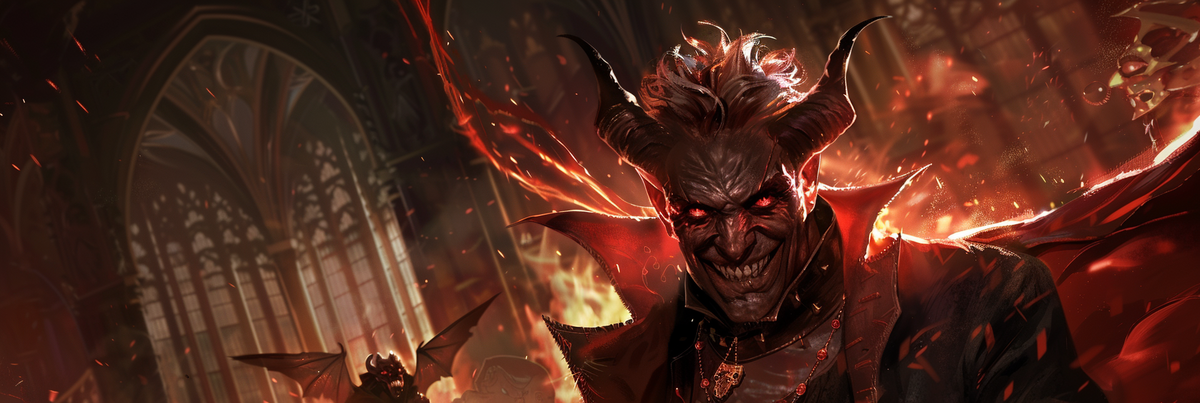
Lamia
large fiend, chaotic evil
Defense
Proficiencies & Senses
Actions
Multiattack
The monster makes two Claw attacks. It can replace one attack with a use of Corrupting Touch.
Claw
Melee Attack: +5 to hit. reach 5 ft. Hit: 1d8 + 3 slashing plus 2d6 psychic damage.
Corrupting Touch
Wisdom Save: DC 13. target: creature. Failure: 3d8 psychic damage.
Spellcasting
The monster casts one of the following spells, requiring no Material components and using Charisma as the spellcasting ability: At Will: Disguise Self (can appear as a Large or Medium biped), Minor Illusion 1/Day Each: Geas, Major Image, Scrying
Leap
The monster jumps up to feet by.
Disguise Self
You make yourself—including your clothing, armor, weapons, and other belongings on your person—look different until the spell ends. You can seem 1 foot shorter or taller and can appear heavier or lighter. You must adopt a form that has the same basic arrangement of limbs as you have. Otherwise, the extent of the illusion is up to you. The changes wrought by this spell fail to hold up to physical inspection. For example, if you use this spell to add a hat to your outfit, objects pass through the hat, and anyone who touches it would feel nothing. To discern that you are disguised, a creature must take the Study action to inspect your appearance and succeed on an check against your spell save DC.
Minor Illusion
You create a sound or an image of an object within range that lasts for the duration. See the descriptions below for the effects of each. The illusion ends if you cast this spell again. If a creature takes a Study action to examine the sound or image, the creature can determine that it is an illusion with a successful check against your spell save DC. If a creature discerns the illusion for what it is, the illusion becomes faint to the creature. Sound. If you create a sound, its volume can range from a whisper to a scream. It can be your voice, someone else's voice, a lion's roar, a beating of drums, or any other sound you choose. The sound continues unabated throughout the duration, or you can make discrete sounds at different times before the spell ends. Image. If you create an image of an object—such as a chair, muddy footprints, or a small chest—it must be no larger than a 5-foot Cube. The image can't create sound, light, smell, or any other sensory effect. Physical interaction with the image reveals it to be an illusion, since things can pass through it.
Geas
You give a verbal command to a creature that you can see within range, ordering it to carry out some service or refrain from an action or a course of activity as you decide. The target must succeed on a Wisdom saving throw or have the Charmed condition for the duration. The target automatically succeeds if it can't understand your command. While Charmed, the creature takes damage if it acts in a manner directly counter to your command. It takes this damage no more than once each day. You can issue any command you choose, short of an activity that would result in certain death. Should you issue a suicidal command, the spell ends. A Remove Curse, Greater Restoration, or Wish spell ends this spell. Using a Higher-Level Spell Slot. If you use a level 7 or 8 spell slot, the duration is 365 days. If you use a level 9 spell slot, the spell lasts until it is ended by one of the spells mentioned above.
Major Image
You create the image of an object, a creature, or some other visible phenomenon that is no larger than a 20-foot Cube. The image appears at a spot that you can see within range and lasts for the duration. It seems real, including sounds, smells, and temperature appropriate to the thing depicted, but it can't deal damage or cause conditions. If you are within range of the illusion, you can take a Magic action to cause the image to move to any other spot within range. As the image changes location, you can alter its appearance so that its movements appear natural for the image. For example, if you create an image of a creature and move it, you can alter the image so that it appears to be walking. Similarly, you can cause the illusion to make different sounds at different times, even making it carry on a conversation, for example. Physical interaction with the image reveals it to be an illusion, for things can pass through it. A creature that takes a Study action to examine the image can determine that it is an illusion with a successful check against your spell save DC. If a creature discerns the illusion for what it is, the creature can see through the image, and its other sensory qualities become faint to the creature. Using a Higher-Level Spell Slot. The spell lasts until dispelled, without requiring Concentration, if cast with a level 4+ spell slot.
Scrying
You can see and hear a creature you choose that is on the same plane of existence as you. The target makes a Wisdom saving throw, which is modified (see the tables below) by how well you know the target and the sort of physical connection you have to it. The target doesn't know what it is making the save against, only that it feels uneasy. Your Knowledge of the Target Is …Save ModifierSecondhand (heard of the target)+5Firsthand (met the target)+0Extensive (know the target well)−5You Have the Target's …Save ModifierPicture or other likeness−2Garment or other possession−4Body part, lock of hair, or bit of nail−10On a successful save, the target isn't affected, and you can't use this spell on it again for 24 hours. On a failed save, the spell creates an Invisible, intangible sensor within 10 feet of the target. You can see and hear through the sensor as if you were there. The sensor moves with the target, remaining within 10 feet of it for the duration. If something can see the sensor, it appears as a luminous orb about the size of your fist. Instead of targeting a creature, you can target a location you have seen. When you do so, the sensor appears at that location and doesn't move.