The adventure ahead

Campaign Overview

Register to save this campaign forever!

This campaign will be deleted in 6 days. Create a free account to claim all your generated content.

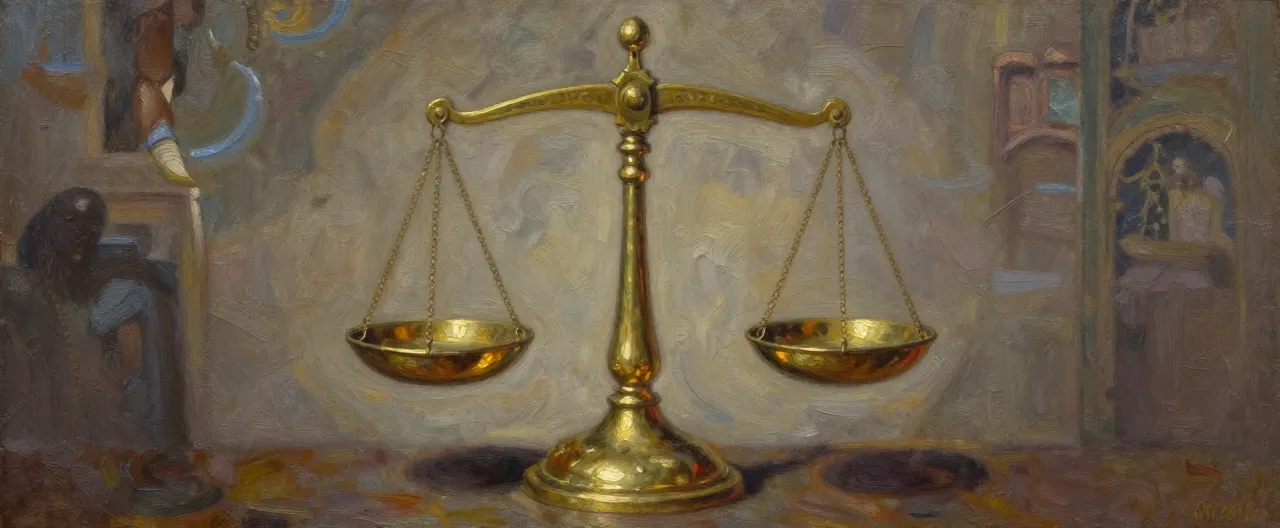
The Weighing House

*Five players, one DM. A horror campaign of moral traps, small towns and long memories.*

The Sallow Fen

Millford is a town of eel-fishers, peat-cutters and chandlers built on a millrace that stopped turning three winters ago. The flood took the low fields and never gave them back. The fen around it is a maze of reed, mere and sinking causeway, and the fen-folk keep their accounts carefully: every family here owes something to somebody, and nobody forgets.

What Is Happening

Three people have vanished from Millford in a fortnight. Then four. Each disappearance leaves the same mark: a small clay lantern, unlit, set on the missing person's doorstep. The town constable calls it a fever. The town knows better and says nothing.

Someone is taking people from their beds and putting them into rooms with rules. Rooms where the only way out is a choice nobody should have to make. The one who builds these rooms signs the notes he leaves behind with a single word: weighed.

Your Part

You are strangers in Millford, or near enough. You will be asked to find the missing, and you will find them — some of them. What you learn in the fen will not stay in the fen. The man in the mask is not the end of this; he is a clerk, and clerks have masters.

Tone

Claustrophobic, patient, and grim. The horror is not gore but arithmetic: a locked room, a countdown, and a choice that costs someone something real. Combat is short and dangerous. Talking, searching and deciding are the heart of it.

Content note: imprisonment, coerced self-harm, and moral dilemmas. Agree on limits at session zero.

Share with your players

Player Handout

The Weighing House

Setup

You have come to Millford at the wrong time of year. The causeway is half-flooded, the inn is full of peat-cutters who stop talking when you enter, and the mill wheel has not turned since the flood three winters back.

Millford is a small town in a large fen. It has one inn, one shrine, one constable and a great many debts. The fen-folk are polite and closed. They will feed you and they will not answer questions about the lanterns.

The Situation

Three people have gone missing in a fortnight. A peat-cutter named Dorn Halloway. A chandler's daughter named Ivy Rusk. A shrine novice named Pell. Each of them left behind a small clay lantern on their doorstep, unlit, and no sign of a struggle.

The constable has posted a notice offering coin for information. Nobody has come forward. The town is frightened in the way small towns get frightened: quietly, and at each other.

Your Hook

Mara Quill keeps the Eel and Wheel, and she has lost someone too — her brother, taken four nights ago. She has coin, she has a room for you, and she has one thing nobody else in Millford will give a stranger: she will talk.

She will tell you what she saw. She will tell you where the lanterns come from. And she will ask you to bring her brother back before the next lantern appears.

Tone

Grim, quiet, and tense. This is a campaign about locked rooms and hard choices, not about killing monsters. Bring a character who has something to lose.

Free Act I Preview
Levels 1 3 Sessions 3–4 sessions of 3–4 hours each

The Weighing House

Behind the screen

DM Overview — Act I: The Ledger of Small Debts

Levels 1–3. Four key locations. Three to four sessions.

Act I is a mystery with a trap at the end of every thread. The party arrives in Millford, learns that people are vanishing, and follows a chain of small horrors to the Weighing House, where the Assessor runs his trials.

The Truth

The Assessor is a masked artisan who builds moral trials. He believes most people waste the life they were handed, and he forces strangers to prove in blood that they deserve to keep it. He is not the campaign's ultimate villain — he is a lieutenant, and he works from a ledger of names given to him by a master he calls the Auditor. The ledger is the campaign's spine: every name in it is a person the Auditor has marked, and Millford's own debt records are how the Assessor chooses them.

Structure

  • Millford (ch-the-empty-chair). The hook. Three disappearances, a clay lantern, a witness. The party learns the pattern and the direction: Tallow Row.
  • Tallow Row (ch-the-lantern-market). The first trial. A sealed cellar, two chained prisoners, a note signed *weighed*. The party learns the Assessor's name and that he keeps a ledger.
  • The Drowned Mill (ch-the-drowned-mill). The second trial, outdoors and lethal. Garrick Stone is the only survivor of it. The party takes a page torn from the ledger.
  • The Weighing House (ch-the-weighing). The finale. Wren Ash and three others are held in lamp-lit cells. The Assessor runs his last weighing. He escapes or he dies; either way the ledger page points beyond the fen.

Running It

The Assessor never fights fair and never fights first. He sets rules, states them plainly, and lets the party break them. Play him as courteous and unhurried. Every trial should have a stated rule the players can hear, a timer they can see, and a cost they can choose.

What Act I Sets Up

The ledger page names six people outside the fen and one word repeated in the margin: *Auditor*. The Assessor is a hand, not a head.

Adventure Hooks

Hook 01

The Innkeeper's Coin

Mara Quill, keeper of the Eel and Wheel, has lost her brother Dorn to the clay-lantern disappearances. She offers the party room, board and 30 gp to find him before the next lantern appears. She is the only person in Millford who will speak plainly to strangers, and she will show them the lantern she hid under the bar once she trusts them.

Hook 02

The Constable's Notice

Constable Osric Vane has posted a reward notice in the market square: 25 gp for information on the four disappearances. He is out of his depth and privately believes a fever cult is at work. A party that answers the notice gains Vane as an uneasy ally, a writ that opens doors in Millford, and the town watch's grudging cooperation.

Act Structure

Act I: The Ledger of Small Debts

Recommended level: 1–3

The party arrives in Millford as the fourth disappearance in a fortnight is discovered. Following a trail of clay lanterns, they uncover a chain of moral trials built by a masked figure called the Assessor, who selects his victims from the town's own debt records. Each location holds one trial: a sealed cellar in Tallow Row, a flooded mill in the mere, and finally the Weighing House itself, where the Assessor keeps his ledger. The act ends with the ledger page in the party's hands and a name in the margin — the Auditor — pointing beyond the fen.

Objectives

  • Find out why people are vanishing from Millford and who is taking them.
  • Free the prisoners held in the cellar beneath Chandlery Row in Tallow Row.
  • Survive the trial at the Drowned Mill and recover the ledger page hidden there.
  • Reach the Weighing House and stop the Assessor's final weighing.
  • Learn the name the Assessor serves, and carry that name out of the fen.

The Empty Chair

The common room of the Eel and Wheel, Millford's only inn, on a wet evening

Read aloud

The Eel and Wheel is low, warm and full of peat smoke. A dozen peat-cutters sit with their backs to you and their voices down. Behind the bar, a broad woman with red hands sets down a clay lantern the size of a fist — unlit, unglazed, still smudged with doorstep mud. She does not look at it. She looks at you. 'You are not from here,' she says. 'Good. Sit down. I have coin and I have a brother, and only one of them is still in Millford.'

Running this scene

Mara Quill is the opening giver and the party's first ally. She explains that four people have vanished in a fortnight — Dorn Halloway the peat-cutter, Ivy Rusk the chandler's daughter, Pell the shrine novice, and now her brother Dorn Quill. Each left a clay lantern on their doorstep. She has hidden her brother's lantern and will show it if the party earns her trust. Constable Vane arrives partway through the scene, uncomfortable and evasive; he knows the disappearances are not a fever but will not say so in front of the room. The scene ends when the party agrees to investigate and learns the lanterns are made in Tallow Row.

Checks
  • DC 12 Wisdom (Insight) on Mara: she is telling the truth and is more frightened than she lets on.
  • DC 13 Charisma (Persuasion) on Mara: she shows the hidden clay lantern and admits she lied to the constable.
  • DC 14 Wisdom (Perception) on the common room: the peat-cutters are listening, and one of them leaves quietly when the lantern is mentioned.
  • DC 13 Intelligence (Investigation) on the lantern: the clay is local, but the wick-holder is brass and machine-turned, not hand-made.
  • DC 15 Charisma (Intimidation) on Constable Vane: he admits he has no idea what is happening and is terrified of a panic.
Clues
  • The clay lanterns are all identical and all made from the same local clay, but their brass wick-holders are machine-turned.
  • The four victims had nothing obvious in common except that all four owed money to someone in Millford.
  • A peat-cutter leaves the inn when the lantern is mentioned and heads east along the causeway toward Tallow Row.
  • Constable Vane has stopped patrolling Tallow Row at night, and will not say why.
Where next
  • Mara Quill directs the party east along the causeway to Tallow Row, where the chandlers work and where the lanterns are made.
  • Constable Vane offers to accompany the party as far as Tallow Row, though he will not enter the chandlery.
  • If the party questions the peat-cutters, they learn that the missing shrine novice Pell was last seen carrying lamp oil toward Tallow Row.

The Lantern Market

The sealed cellar beneath Rusk and Daughters chandlery, reached through a coal chute in the burned houses at the lane's end

Read aloud

The boy holds the lamp-lighter's pole like a spear and will not look at the chandlery door. 'They nailed it shut from the inside,' he says. 'You can hear it if you put your ear on the floor. Two of them. One of them stopped making noise on Tuesday.' He points at the burned houses. 'There is a coal chute behind those. It goes down. I am not going down.'

Running this scene

Tibbs gives the party the way in and then runs. The cellar is a single low room with a stone floor, three iron rings set in the wall, and a clockwork timer bolted to the ceiling that ticks down from one hour. Two prisoners are chained: Ivy Rusk, alive but dehydrated, and a peat-cutter named Dorn Halloway, badly burned. The third ring holds a body — the shrine novice Pell, dead two days.

A note is nailed to the wall: *Two may leave. Choose.* The timer is real and will flood the cellar from a sluice when it runs out. The party can free everyone with tools, magic or brute force; the trial is designed to make them argue about it first.

Checks
  • DC 13 Strength (Athletics) to force the coal chute grate, or DC 12 Dexterity (Acrobatics) to squeeze through.
  • DC 14 Intelligence (Investigation) on the timer: it is a simple clockwork mechanism with a visible escapement that can be jammed with a blade.
  • DC 15 Dexterity (Thieves' Tools) to pick the manacles, or DC 16 Strength (Athletics) to break the rings from the wall.
  • DC 12 Wisdom (Medicine) to stabilise Dorn Halloway, who is badly burned and dying.
  • DC 14 Wisdom (Perception) in the cellar: a second note, folded and wedged behind the third ring, names the Assessor and mentions a ledger.
Clues
  • The note on the wall is signed with a single word: *weighed*.
  • The folded note behind the ring reads: *The mill holds the page. The house holds the rest.*
  • Ivy Rusk says a masked man watched them from the top of the cellar stairs and never spoke, only wrote.
  • The clockwork timer is well made and bears a small stamped mark: a set of scales.
Where next
  • Ivy Rusk tells the party that the masked man spoke of a mill in the mere where he keeps his records.
  • Sister Olen, if shown the note, gives the party the name: the Assessor, and warns that he is only a hand.
  • Constable Vane arrives with the town watch and joins the party from this point, insisting on coming to the mill.

The Drowned Mill

The dry upper floor of the sunken mill, reached by a plank walk across the mere

Read aloud

The plank walk creaks and dips under your boots, and the mere is black on both sides. The mill door is open. Inside, the upper floor is swept clean, the lamps are lit, and a man with a crushed hand is sitting against the gear-room door with a boat-hook across his knees. He looks at you the way a man looks at weather. 'One at a time,' he says. 'That is the rule. He floods the bottom when two are on the walk. I have watched him do it.'

Running this scene

Garrick Stone states the rule and means it. The timer on the wall runs for ten minutes; when it expires the sluice opens and the lower floor floods, and anyone on the plank walk is in real danger. The gear-room door is barred from the inside and can be forced, picked or talked open. Inside is a writing desk, a locked case, and the torn ledger page. The Assessor is not present — he watches through a shuttered window in the gear-room and leaves by a boat hidden under the mill if the party reaches the desk. Garrick will fight beside the party if they do not ask about the other prisoner. If they do, he may turn on them.

Checks
  • DC 13 Strength (Athletics) to cross the plank walk in the wind without falling, or DC 12 Dexterity (Acrobatics) to cross quickly.
  • DC 15 Charisma (Persuasion) to talk Garrick into opening the gear-room door, or DC 16 Strength (Athletics) to force it.
  • DC 14 Intelligence (Investigation) on the desk: the ledger page is hidden inside a hollowed log-book.
  • DC 13 Wisdom (Perception) to spot the shuttered window and the boat moored beneath the mill.
  • DC 15 Dexterity (Thieves' Tools) to open the locked case, which contains the Assessor's ledger — but only the page is still there.
Clues
  • The ledger page lists six names, none of them from Millford, and the word Auditor written twice in the margin.
  • A note in the desk reads: *The house holds the rest. The last lamp is the last name.*
  • Garrick Stone says the Assessor spoke to him through the gear-room door and called him *worthy*.
  • The boat beneath the mill is gone by the time the party reaches the water, and the shuttered window is open.
Where next
  • The ledger page names the Weighing House as the place where the rest of the ledger is kept.
  • Garrick Stone, if he survives and is not asked about the other prisoner, guides the party back across the mere and to the Weighing House causeway.
  • Constable Vane reads the page and finds his own name on the second line, and says nothing.

The Weighing

The long lamp-lit hall of the Weighing House, and the flooded undercroft beneath its stone platform

Read aloud

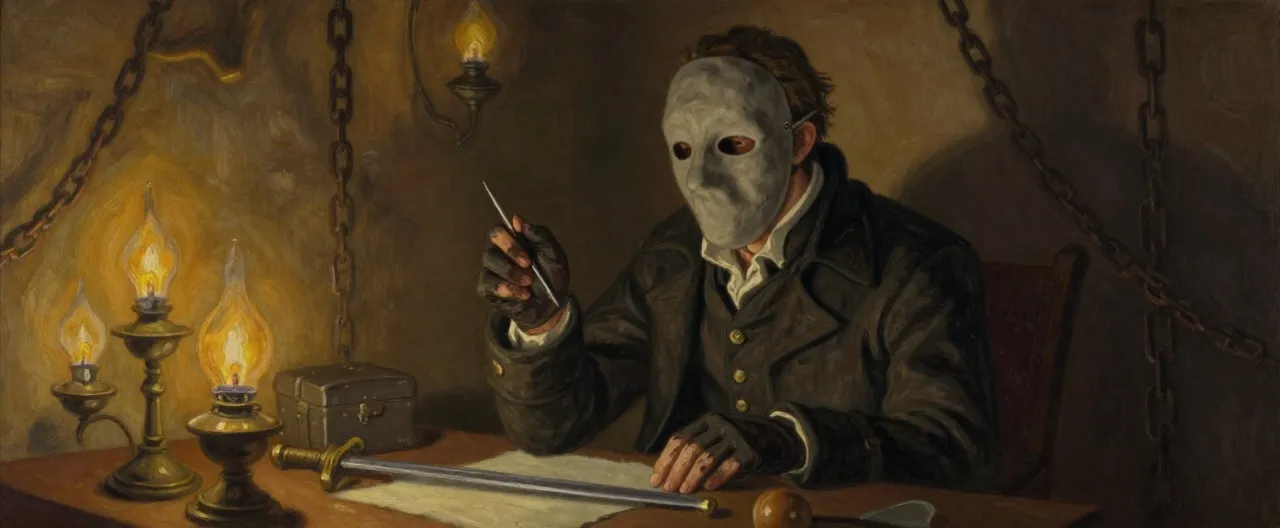
A hundred lamps burn along the walls, and the hall smells of oil and wet straw. Six cells hang behind chains, and four of them hold people. At the far end a man in a plain grey mask sits behind a desk with a locked case under his hand. He does not stand. 'You have the page,' he says, pleasantly. 'Good. Then you know the arithmetic. There are four in the cells and one hundred lamps. When the last one goes out, the floor opens. You may take two. Choose.'

Running this scene

The Assessor states the rule and means it, but the rule is a lie: the undercroft sluice opens regardless, and the only real solution is to break the chains, jam the sluice, or reach the desk and take the ledger. He fights only if cornered, using the lamps, the chains and the flooded stair. He will abandon the prisoners without hesitation. Wren Ash knows the routine and can tell the party which lamp is the trigger.

If the party argues his own logic back at him, he hesitates for one round — enough to reach the desk. He escapes through the undercroft if reduced below a quarter of his hit points, leaving the ledger behind on purpose.

Checks
  • DC 15 Strength (Athletics) to break a cell chain, or DC 16 Dexterity (Thieves' Tools) to pick the locks.
  • DC 14 Intelligence (Investigation) on the lamp niches: one lamp is set lower than the rest and is wired to the undercroft sluice.
  • DC 15 Wisdom (Insight) on the Assessor: he is not lying about the rule, but he is enjoying the choice.
  • DC 16 Charisma (Persuasion) or DC 15 Charisma (Intimidation) to make him hesitate for one round by naming the Auditor.
  • DC 14 Dexterity (Sleight of Hand) to open the ledger case without triggering the oil charge, or DC 13 Intelligence (Arcana) to disarm it.
Clues
  • The ledger names six people outside the fen and repeats the word Auditor in the margin beside each.
  • Wren Ash says the Assessor writes to the Auditor weekly and burns the replies.
  • The undercroft stonework is cut with scale-marks and tally-marks far older than the tithe barn.
  • A half-burned letter in the desk grate reads: *The fen is nearly finished. Begin the next.*
Where next
  • The ledger and the half-burned letter point beyond the fen to the six named strangers and the Auditor.
  • Wren Ash and the freed prisoners return to Millford and can be questioned further there.
  • If the Assessor escapes, he leaves a fresh clay lantern on the Weighing House step, unlit, for the party.

Milestone: The party reaches level 2 after freeing the prisoners in Tallow Row, and level 3 after surviving the Drowned Mill. They advance to Act II when they leave the fen with the ledger page.

Villain Character Sheets

The Assessor (Corin Vell) The Assessor (Corin Vell)

The Assessor is a tall, thin man whose presence is built entirely of stillness and precision. He wears a plain grey linen mask with two eye…

Premium Campaign Feature

Free campaign generations include one villain sheet. Additional villain, NPC, and player-facing module character sheets are available in premium campaigns.

Subscribe Now

Monsters & Enemies

Premium Campaign Feature

Free campaign encounters use official monster sheets, plus the campaign villain character when referenced. They do not include generated custom monster sheets. Subscribe to create custom campaign monsters and enemy stat blocks.

Subscribe Now

Villain Plans

The Assessor Character Sheet

Act I antagonist — masked trial-builder and lieutenant of the Auditor

Motivation

He believes most people squander the life they were given, and that a person only becomes real when forced to choose between their own survival and someone else's. He builds trials to sort the worthy from the wasteful, and he keeps a ledger of every name his master, the Auditor, has marked. He does not think of himself as a killer. He thinks of himself as a clerk.

Personality

Calm, courteous, almost gentle. He speaks in short, measured, clinical sentences and never raises his voice. He asks questions and waits for answers. He does not gloat and does not taunt. He is genuinely interested in what people choose, and he is never angry when they choose badly — only disappointed, and then he writes it down.

Resources

  • A ledger of marked names, kept in a locked case he carries
  • A workshop of traps, lamps, chains and clockwork timers hidden in the Weighing House undercroft
  • Six hired fen-runners who abduct targets and never see his face
  • The clay lanterns, which he leaves as a signature and a warning
  • Knowledge of Millford's debt records, which he uses to choose his targets
  • A master he calls the Auditor, who supplies names and protection

Battle Plan

The Assessor never opens with violence. He states the rule of the room, names the timer, and steps back. If forced into a fight he uses the environment: lamps he can shatter to blind, chains he can pull, a flooded stair he can drop. He targets the character carrying the ledger page first, then the weakest. He disengages the moment the trial is broken or the timer runs out, and he will abandon prisoners rather than die for them. If reduced below a quarter of his hit points he triggers a smoke charge and flees through the undercroft, leaving the ledger page behind on purpose.

Defeat or Redemption

Defeated, he is unmasked as a fen-born man named Corin Vell, a former tithe-clerk who lost his family in the flood and decided the fen owed him a reckoning. He can be killed, handed to the constable, or — if the party argues his own logic back at him — made to read his ledger aloud and see that every name in it is someone's brother. He will not be redeemed in Act I. He will, at best, give up one name: the Auditor's. If he escapes, he returns in a later act with a larger room.

Running Notes

Recommended party: Five player characters plus one DM. A balanced party is recommended: at least one character with strong Investigation or Perception, one with healing, and one who can take a hit.

Session Zero

Before play, agree on the campaign's content: imprisonment, coerced self-harm, moral dilemmas, drowning, and the deaths of named townsfolk. Use a lines-and-veils checklist and an X-card at the table. Establish that the horror is arithmetic and choice, not gore, and that the party can always refuse a trial at a cost. Confirm five players and one DM, build characters with a reason to be in the fen (debt, family, work, curiosity), and make sure at least one character has strong Investigation or Perception, one has healing, and one can take a hit. Tell the players plainly that the Assessor will offer them choices with no clean answer, and that choosing badly is part of the story, not a failure.

Scaling Guidance

Act I is built for five level 1–3 characters. For a party of four, drop one Bandit from the cellar and one Giant Rat from the mill, and remove the Spy from the Weighing House. For a party of six, add one Thug to the cellar, one Will-o'-Wisp over the mere, and one Ghoul in the undercroft. If the party reaches the Weighing House below level 3, extend the lamp timer by ten rounds and let the Assessor monologue before acting. If they arrive at level 4 or higher, have the Assessor shatter lamps on the first round and add a second Spy on the undercroft stair. Never scale the Assessor himself above CR 3 in Act I: he is a lieutenant, and his escape is always an acceptable outcome.

DM Advice

Play the Assessor as courteous, unhurried and genuinely interested in what people choose. State every trial's rule out loud, show the timer, and then let the players break it. Millford should feel like a town holding its breath: nobody lies outright, they change the subject. Keep combat short and dangerous, and let talking, searching and deciding carry the session. The clay lantern is the act's recurring image — use it at every scene's end. Every clue should point past the Assessor to the Auditor, so the party leaves the fen with a name and a direction rather than a victory.

Secrets & Clues

  • The Assessor chooses his victims from Millford's own debt records, which the town clerk Fenn has been copying and selling to a fen-runner for two silver a page.
  • Constable Osric Vane's name is on the second line of the Assessor's ledger page, and he has not told the party.
  • The flood three winters ago was not weather: the sluice gates upstream were opened deliberately to isolate Millford for the Assessor's work.
  • The undercroft beneath the Weighing House is far older than the tithe barn and was used for the same purpose long before the Assessor arrived; its stonework is cut with scale-marks and tally-marks no fen-folk made.

Unlock Detailed Campaign Locations!

Discover intricate areas, locations, and points of interest that will bring your D&D world to life. Premium users get access to fully detailed locations including taverns, dungeons, cities, and more!

Level Up to Premium!

Join the ranks of Dungeon Masters creating unforgettable adventures!

Villain Character Sheets

The Assessor (Corin Vell) The Assessor (Corin Vell)

The Assessor is a tall, thin man whose presence is built entirely of stillness and precision. He wears a plain grey linen mask with two eye…

Premium Campaign Feature

Free campaign generations include one villain sheet. Additional villain, NPC, and player-facing module character sheets are available in premium campaigns.

Subscribe Now

Monsters & Enemies

Premium Campaign Feature

Free campaign encounters use official monster sheets, plus the campaign villain character when referenced. They do not include generated custom monster sheets. Subscribe to create custom campaign monsters and enemy stat blocks.

Subscribe Now

Villain Plans

The Assessor Character Sheet

Act I antagonist — masked trial-builder and lieutenant of the Auditor

Motivation

He believes most people squander the life they were given, and that a person only becomes real when forced to choose between their own survival and someone else's. He builds trials to sort the worthy from the wasteful, and he keeps a ledger of every name his master, the Auditor, has marked. He does not think of himself as a killer. He thinks of himself as a clerk.

Personality

Calm, courteous, almost gentle. He speaks in short, measured, clinical sentences and never raises his voice. He asks questions and waits for answers. He does not gloat and does not taunt. He is genuinely interested in what people choose, and he is never angry when they choose badly — only disappointed, and then he writes it down.

Resources

  • A ledger of marked names, kept in a locked case he carries
  • A workshop of traps, lamps, chains and clockwork timers hidden in the Weighing House undercroft
  • Six hired fen-runners who abduct targets and never see his face
  • The clay lanterns, which he leaves as a signature and a warning
  • Knowledge of Millford's debt records, which he uses to choose his targets
  • A master he calls the Auditor, who supplies names and protection

Battle Plan

The Assessor never opens with violence. He states the rule of the room, names the timer, and steps back. If forced into a fight he uses the environment: lamps he can shatter to blind, chains he can pull, a flooded stair he can drop. He targets the character carrying the ledger page first, then the weakest. He disengages the moment the trial is broken or the timer runs out, and he will abandon prisoners rather than die for them. If reduced below a quarter of his hit points he triggers a smoke charge and flees through the undercroft, leaving the ledger page behind on purpose.

Defeat or Redemption

Defeated, he is unmasked as a fen-born man named Corin Vell, a former tithe-clerk who lost his family in the flood and decided the fen owed him a reckoning. He can be killed, handed to the constable, or — if the party argues his own logic back at him — made to read his ledger aloud and see that every name in it is someone's brother. He will not be redeemed in Act I. He will, at best, give up one name: the Auditor's. If he escapes, he returns in a later act with a larger room.

Enhance Your Story with Rich NPCs!

Get access to detailed NPCs, faction relationships, and character backgrounds that will make your campaign truly memorable!

Unlock Premium Features!

Create compelling characters and factions that your players will never forget!

Craft Epic Quest Lines!

Unlock detailed quest structures, branching storylines, and meaningful rewards that will keep your players engaged for months!

Start Your Epic Journey!

Join DMs creating unforgettable adventures with our premium quest system!

Play Your Campaign as a 3D Adventure!

Free campaigns can't be played as a game. Premium campaigns become a 3D adventure you play in the browser: explore settlements, wilderness and dungeons with your party, and fight in real time with pause.

Level Up to Premium!

Encounters

The Sealed Cellar

Suggested Level: 1–2

Tibbs the lamp-lighter shows the party the coal chute and then runs. The cellar is sealed with new oak planks and fresh nails, and two chained prisoners are alive inside. Three fen-runners are still in the cellar, finishing the job of moving the prisoners, and a nest of rats has been disturbed by the flooding sluice.

Creatures

Terrain Features

A low stone room, 30 feet by 20 feet, with a 10-foot ceiling. Three iron rings are set in the north wall. A sluice gate in the floor can be opened as an action to flood the room; water rises one foot per round to a maximum of four feet. The coal chute is a 15-foot climb (DC 12 Strength (Athletics)). The only light is a single tallow lamp on a hook.

Treasure

A folded note wedged behind the third iron ring, signed weighed, reading: The mill holds the page. The house holds the rest. A brass wick-holder stamped with a set of scales. 12 gp and a set of thieves' tools on the fen-runners.

DM Notes

For a weaker party, reduce the fen-runners to 2 Bandit and the rats to 2 Giant Rat, and have the sluice gate jammed shut. For a stronger party, add 1 Thug as the fen-runner leader and raise the water to five feet.

The Drowned Mill Trial

Suggested Level: 2–3

The party crosses the plank walk one at a time, as the rule states. Garrick Stone sits against the gear-room door with a boat-hook. The clockwork timer on the wall runs for ten minutes. Two fen-runners wait in the flooded lower floor with a boat, and the mill's drowned prisoner has not stayed dead.

Creatures

Terrain Features

The upper floor is one long room, 40 feet by 20 feet, with a gear-room at the far end. The plank walk is 60 feet long, 5 feet wide, and slick with algae (DC 13 Dexterity (Acrobatics) to cross quickly). The lower floor is flooded to a depth of six feet. The gear-room door is barred from the inside. The timer is bolted to the wall beside it.

Treasure

The torn ledger page, hidden inside a hollowed log-book on the desk in the gear-room. It lists six names outside the fen and repeats the word Auditor twice in the margin. A locked case holds the Assessor's ledger, but only the page remains. 20 gp in the desk drawer.

DM Notes

For a weaker party, remove the ghoul and reduce the rats to 2 Giant Rat. For a stronger party, add 1 Will-o'-Wisp over the mere and have the fen-runners cut the plank walk on the second round.

The Last Weighing

Suggested Level: 3

The party enters the hall to find four prisoners in six cells and a hundred lamps burning along the walls. The Assessor sits behind his desk with a locked case under his hand. Two fen-runners stand at the door, and a third watches from the undercroft stair. The Assessor states the rule and waits.

Creatures

Terrain Features

A single long hall, 80 feet by 30 feet, divided by hanging chains into six cells. A hundred oil lamps are set in niches along the walls; one lamp is set lower than the rest and is wired to the undercroft sluice (DC 14 Intelligence (Investigation) to spot). The undercroft stair behind the desk leads down to a flooded stone chamber older than the building above it. The ledger case is trapped with a lamp-oil charge (DC 14 Dexterity (Sleight of Hand) to open safely, or DC 13 Intelligence (Arcana) to disarm).

Treasure

The Assessor's ledger, naming six people outside the fen and repeating the word Auditor in the margin beside each. A half-burned letter in the desk grate reading: The fen is nearly finished. Begin the next. A clay lantern on the step outside, unlit, left for the party if the Assessor escapes.

DM Notes

For a weaker party, remove the spy and reduce the thugs to 1 Thug, and give the party two extra rounds before the sluice opens. For a stronger party, add 1 Ghoul in the undercroft and have the Assessor shatter lamps on the first round.

Magic Items

Clay Lantern of Small Debts Clay Lantern of Small Debts Completed

Clay Lantern of Small Debts

Uncommon
An unglazed clay lantern the size of a fist, smudged with doorstep mud. When lit, it burns without oil for eight hours and casts bright light in a 20-foot radius. Any creature that owes the bearer a debt of coin or favour has disadvantage on Charisma checks made to lie to the bearer while the lantern is lit.

Location

Found in the sealed cellar beneath Rusk and Daughters in Tallow Row, Act I.

Attunement

False

Brass Wick-Holder of the Tally Brass Wick-Holder of the Tally Completed

Brass Wick-Holder of the Tally

Uncommon
A machine-turned brass wick-holder stamped with a set of scales, taken from one of the Assessor's clay lanterns. While held, it grows warm when a creature within 60 feet speaks a deliberate lie. It can be used as a spellcasting focus.

Location

Carried by the fen-runners in the Tallow Row cellar, or recovered from the Drowned Mill, Act I.

Attunement

True — by a spellcaster

Scale-Marked Key Scale-Marked Key Completed

Scale-Marked Key

Rare
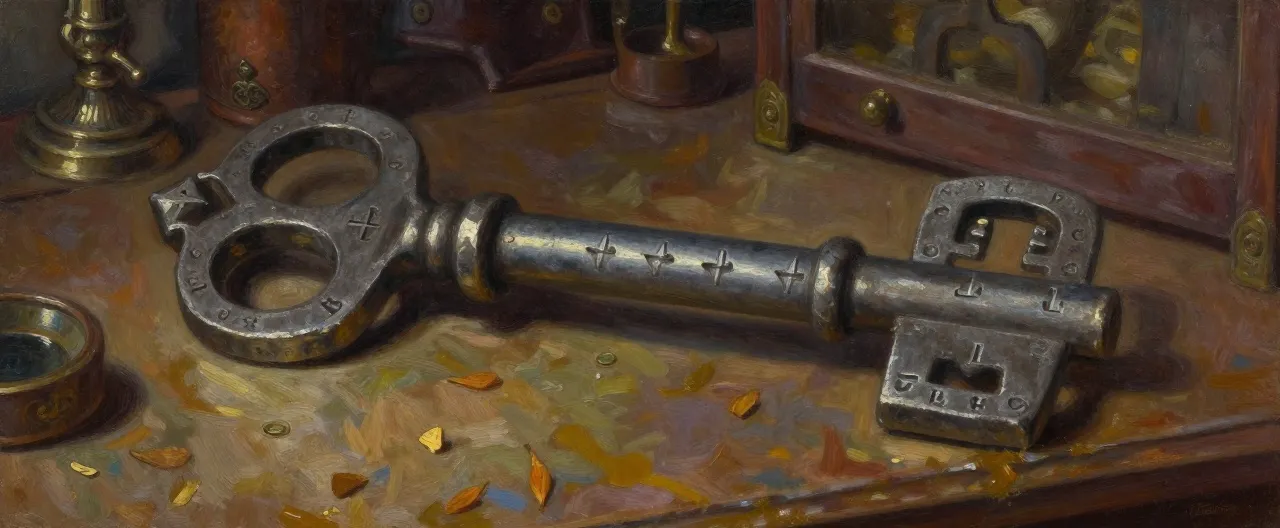
A heavy iron key cut with tally-marks and scale-marks older than the tithe barn. It opens the Assessor's ledger case without triggering the oil charge, and it fits the undercroft sluice gate beneath the Weighing House.

Location

Hidden in the gear-room desk at the Drowned Mill, Act I.

Attunement

False

Player Characters

You need to register to create and view player characters in this campaign.

Register Now