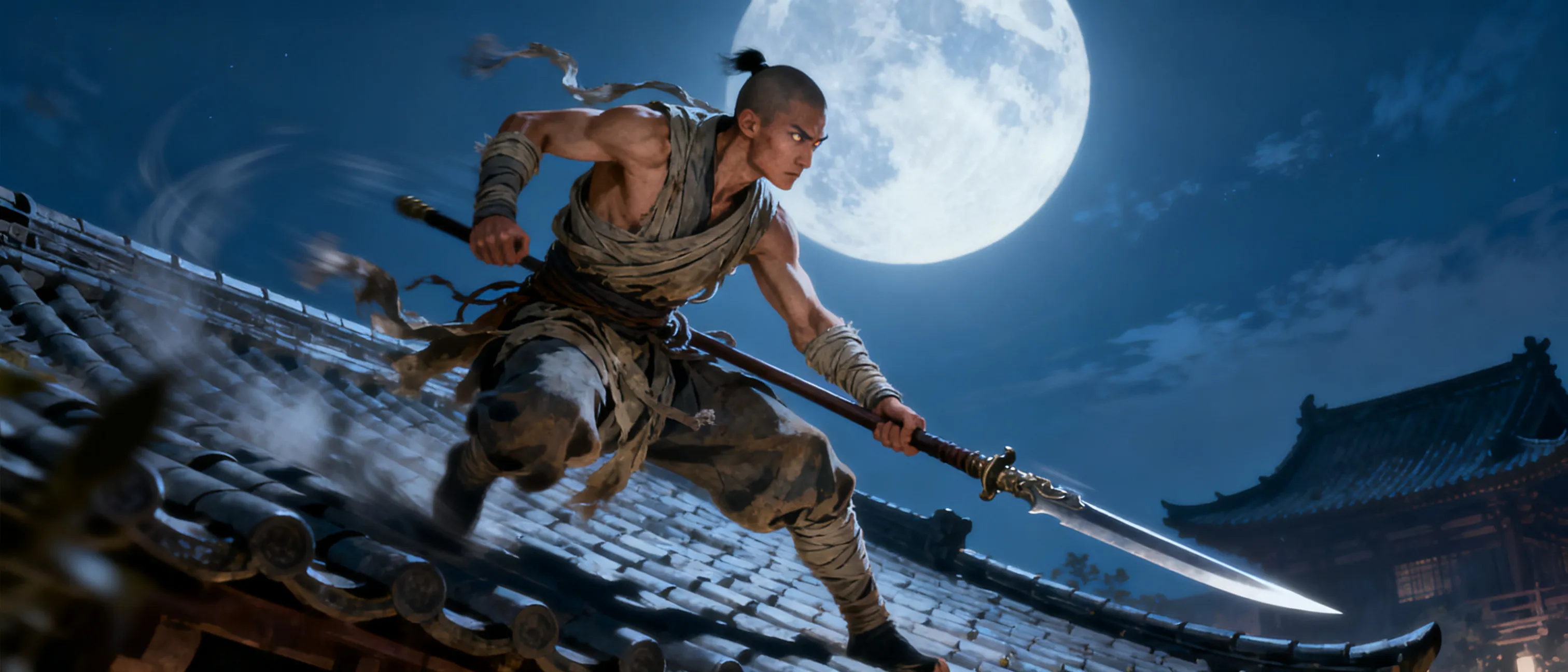
Kael Veyr was born in a district where the roofs were safer than the streets. His earliest memories are of narrow alleys, rainwater running black with soot, and adults who never stayed in one place long enough to be called neighbors. His family survived on any work they could find, but work was scarce and hunger was constant. Even as a child, Kael learned to move quietly. He learned when to run, when to hide, and when to keep his eyes lowered so the wrong sort of attention would pass him by.
His first lessons in theft were not glamorous. He stole crusts of bread from market stalls, copper coins from open purses, and candles from shrines when winter made the nights too long. At first he was clumsy and frightened, but he discovered something important: his body obeyed him quicker than other people’s. He could duck a hand, slip under a cart, and weave through a crowd before an angry shout even rose.
A retired pit-fighter noticed that talent and began teaching him how to stand, how to breathe, and how to let a strike miss by the width of a whisper. That mentor was hard, blunt, and occasionally cruel, but he recognized something in Kael that the boy himself did not yet understand: speed without control is panic, and speed with control is power.
As Kael grew, he spent his days at the edge of legitimate life. He worked as a runner, a lookout, and sometimes a courier for people who asked too few questions. He learned the habits of guards, the timing of patrols, and the way fear changes a person’s balance. A failed job—one that ended with a broken nose, a scar across his ribs, and the betrayal of someone he trusted—pushed him onto a different path. He fled the city rather than be swallowed by it, taking with him only a few clothes, a battered training wrap, and a stolen glaive that had once belonged to a warehouse militia.
The weapon became an obsession. Kael could have relied only on his hands and feet, and in truth he remains more dangerous unarmed than most soldiers are with steel. But the glaive appealed to his mind as much as his instincts. It demanded precision, distance, and timing. It punished hesitation. It rewarded control. Kael began practicing with it in empty fields and abandoned yards, spinning it through a choreography of thrusts, sweeps, and sudden retreats. He discovered that the weapon’s reach mirrored the way he already fought: in and out, seen and gone, present only long enough to end the exchange.
Though he is young, Kael already has a reputation in certain circles. Some call him a thief. Others call him a ghost. A few, usually those who survived an encounter with him, say he is impossible to track because he never seems to be where he should be. Kael does not correct them. He prefers the myth. It is easier to remain unseen when people are already convinced they missed you.
Kael’s personality is a blend of discipline and impatience. He practices relentlessly, but he hates waiting. He is cautious with allies at first, yet fiercely loyal once trust is earned. He values competence, speed, and honesty in action if not always in words. His ideal is simple: freedom through self-mastery. He believes no chain is stronger than fear, and that the best way to break fear is to move before it can fully form.
His bond is with the promise he made to himself the night he escaped the city: never again will he be helpless, cornered, or slow. His flaw is that he sometimes trusts momentum more than judgment, rushing forward because stillness feels too much like surrender.
Kael now wanders the roads as a learner and a weapon in progress, seeking masters who can refine his body, sharpen his discipline, and teach him how to turn a glaive into an extension of his impossible speed. He dreams of the day when an enemy will draw steel, blink, and find the fight already over.