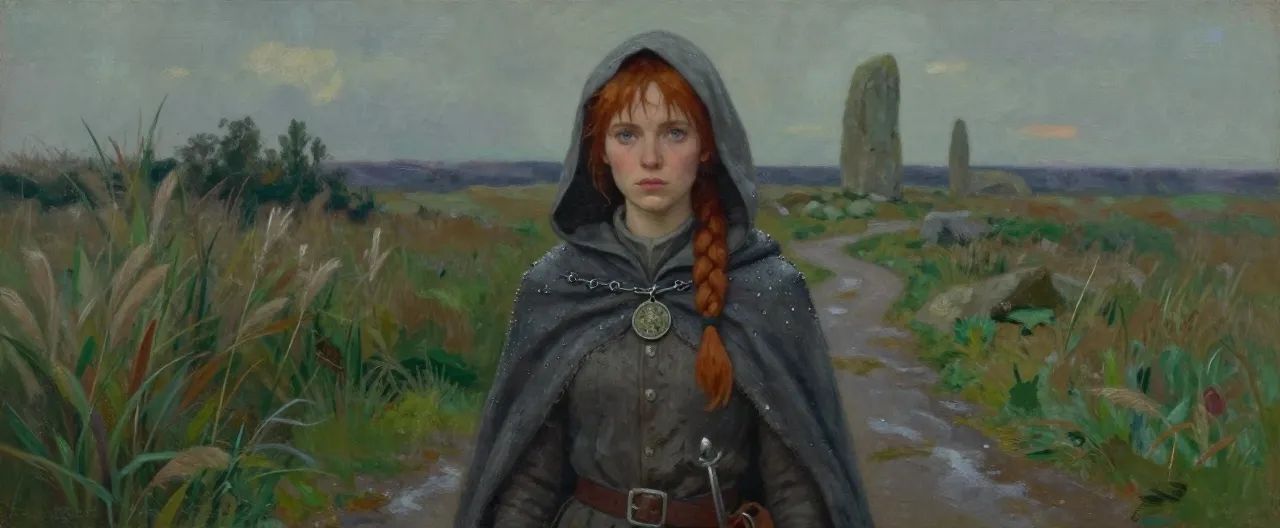
Mina Deepwell was born in a reed-cutters' hamlet three miles west of Milestone, the third of five children of a drover father and a mother who laid out the dead for the whole stretch of the fen. In Lowland Fen that is not a grim trade; it is a necessary one. The marsh takes people every year — eel-fishers, drunk drovers, children who walk the wrong path in the mist — and someone has to wash them, name them, and put them under the peat properly.
Mina's mother did it for forty years and taught her daughter the fen's funeral rites: the coin under the tongue, the lamp burned at the fen edge for the drowned, the nod of the head before speaking a dead person's name. The fen folk worship Chauntea for the harvest and Tymora for the dice, but when it comes to dying, they call on Kelemvor, Judge of the Damned, because Kelemvor's church teaches the one thing fen people already believe: death is not the enemy. Lies about death are the enemy.
When Mina was nineteen, her mother drowned in a channel that the old stories say the king's man made forget how to flood, three hundred years ago. Mina laid her out herself. Something happened at the bier that she has never fully explained — a moment of absolute certainty, cold and clean as fen water, that the dead are owed truth and that someone was watching to see it paid.
She began keeping the vigil herself after that, first for her hamlet, then for neighbouring steadings, and within a year she was functioning as an unordained acolyte, saying the rites over strangers and finding that her prayers were answered. Wisdom came to her the way it comes to people who spend their lives noticing what is missing.
She trained as best the fen allowed — an itinerant Doomguide of Kelemvor's faith passed through Four Corners twice and taught her the discipline of the Life Domain: that the best way to honour death is to postpone it when it can honestly be postponed, and to heal in the dead god's name so that no one arrives before their ledger is balanced. She keeps Bless and Cure Wounds always prepared because of that teaching. She also carries her mother's habit of asking questions twice, because in a village of forty souls, the difference between grief and guilt is often just which way you word the question.
Mina came to Milestone the evening the story begins for a plain reason: three of the emptied were from her own hamlet's orbit, and one of them — a bride who could not feel afraid on her wedding night — was her cousin. She examined the cousin with her mother's eye and found nothing wrong with the body, which frightened her more than any wound. Then she heard about Brother Osmund Crane, the soft-handed priest of the Order of the Gauntlet who went door to door asking after everyone's 'temperament,' and she touched her amulet and knew that whatever he was collecting, it was not testimony.
Kelemvor's creed says death must not be cheated. Mina is quietly terrified that someone in the fen has found a way to cheat people out of the feelings that make dying matter — and she intends to follow the east road and put a stop to it, one honest question at a time.