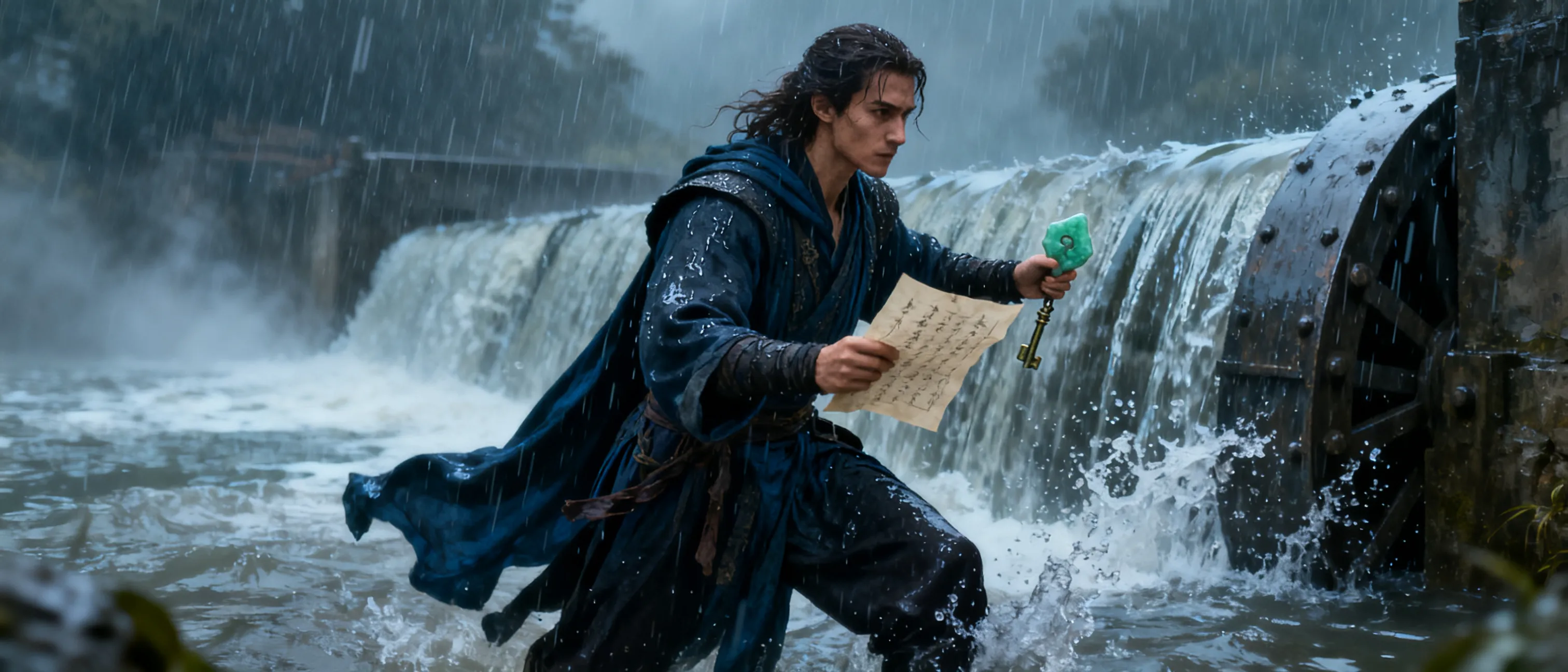
Character Background
Veyl Thorne was born in a district where the ground was always damp and the adults always spoke in measured voices when they thought children could not hear. Their earliest memories were of paper: ledgers drying on hooks, permit stamps clacking against desks, water-damaged maps spread across tables, and clerks who seemed to possess more real authority than the people with swords. Veyl learned early that cities and towns are held together by names, signatures, and the people who can make them vanish. Before they learned spellwork, they learned that the person with the right document could walk through a locked gate while the strongest laborer in the yard was turned away.
As a child, Veyl was clever, quiet, and too observant for their own comfort. They noticed which adults lied badly, which ones lied professionally, and which ones never lied because they preferred to hide the truth in omissions. A flood took part of their neighborhood when they were young, and the official response was slow, organized, and merciless in its priorities. Some houses were saved. Some were abandoned. Some names disappeared from aid lists in ways no one could explain. That experience left a mark deeper than any sermon could have. Veyl did not become sentimental about suffering. They became convinced that control was the only real shelter.
They were bright enough to be noticed and cold enough to be useful. An archivist, surveyor, or low-ranking civic scholar took them under wing and taught them how to read old systems: maintenance routes, storage codes, ritual diagrams, and the logic by which ruined infrastructure still shapes a town's future. Veyl proved to have an unusual talent for seeing what a document could be used for rather than what it said on its face. That made them valuable in offices and dangerous everywhere else. When they began formal magical study, illusion came naturally. It was just another kind of paperwork: a way of making people see what you wanted them to see, hear what you wanted them to hear, and overlook whatever would ruin the plan.
Eventually, Veyl drifted away from institutions that valued caution over ambition. The marsh towns along the floodworks were full of half-forgotten structures, old seals, buried chambers, and records intentionally lost to time. That made them irresistible. Graymire Reach offered the exact combination Veyl needed: a sinking town, a buried secret, and enough local corruption that someone with forged papers and a practical disposition could move unseen for a while. The conspiracy found them, or perhaps they found the conspiracy; the distinction no longer matters. Veyl recognized in the hidden patron a chance to stop being one more clever nobody with a stack of notes and become someone who could actually direct events.
What they learned in the first excavations changed them. The vault beneath the floodworks was not merely a relic site; it was a pressure point in the town's history, something deliberately sealed and deliberately forgotten. Whether the object inside is a device, archive, or authority node, Veyl knows it matters enough that people were willing to erase records to keep it buried. That discovery sharpened their patience into urgency. They now move through the town with forged permits, tunnel tokens, and carefully paid muscle, always a step ahead of the authorities and a step ahead of anyone they hire.
Veyl's personality is a structure built from self-control. They are cool because panic wastes time. They are precise because vagueness gets people killed. They are impatient because every delay gives someone else a chance to seize the vault's power first. In private, they are deeply afraid of being rendered irrelevant, of discovering that all their careful work merely helped someone else inherit the leverage they wanted. That fear makes them brutal in a very specific way: not chaotic, but administrative. They do not indulge in cruelty for pleasure. They inflict it when they decide it is efficient.
Still, there is a crack in the veneer. Veyl understands systems so well that they have begun to suspect the conspiracy itself may be using them the same way they use everyone else. That suspicion is dangerous because it can produce either betrayal or redemption. If the heroes capture them, Veyl may turn on their patron to save themselves, but that does not mean they become kind. It means they finally admit that every chain they trusted had a hand at the other end. If they are defeated but not killed, their notes can lead the party deeper into the campaign's hidden architecture. If they survive as a recurring antagonist, they will do so with the same cold professionalism that brought them to Graymire Reach in the first place: a person in a wet coat, carrying forged papers, standing just behind cover, waiting for the water to rise.