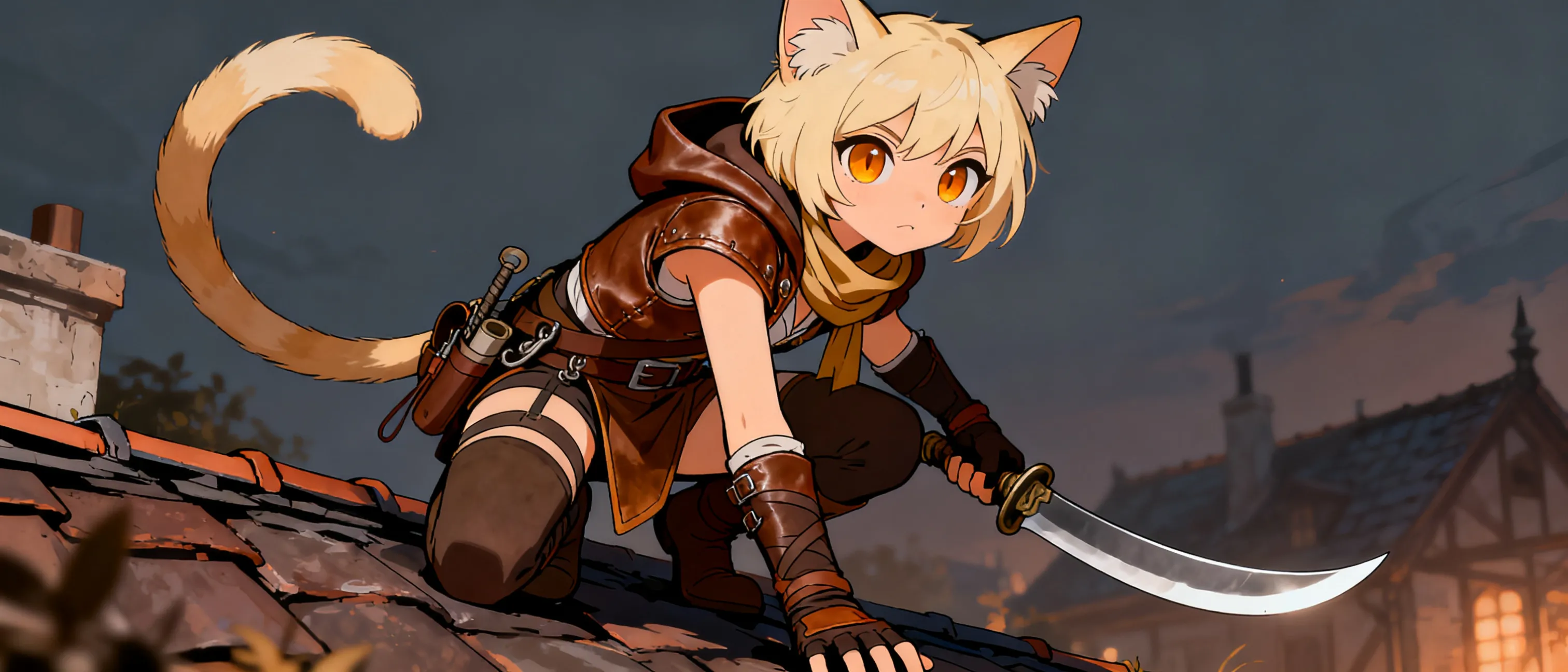
Miyu remembers Earth the way you remember a fever dream: homework, a small apartment, a mother's voice, then nothing—then waking on warm rooftop tiles in a city of slate roofs and temple bells, in a body with claws, ears, and a tail she did not choose. Panic came first. Hunger came second. What saved her was the shrine—not a real one, but a leaning alcove in the Umberwash district where an old hedge-priest named Mother Sennet left bread out for whoever needed it, no questions and no sermons unless asked.
Sennet recognized a stray when she saw one. She taught Miyu the letters of this world, the stories of gentle gods, and, when it became clear the girl needed to eat more reliably than charity allowed, the older and less holy craft of picking pockets. Miyu took to it the way cats take to hunting: instinctively, joyfully, and with an immediate talent for Stealth and Sleight of Hand that made Expertise feel less like training and more like naming something she already was.
Sennet's real legacy, though, was the magic. Folded into her acolyte training was enough genuine faith to leave traces—Guidance whispered over shaking hands, Thaumaturgy to make her voice boom when she needed to scatter bullies, and once, memorably, a Bless that carried three bleeding dockworkers through a bad night. When Sennet died peacefully two winters ago, Miyu inherited the alcove, the bread habit, and the certainty that small kindnesses are the only ones that count.
She fell in with the Umberwash crews afterward because a rogue needs fences and warnings, and her Criminal Contact—a one-eared fence named Vetch—trades her rumors for runs. But she has never taken a job that hurt someone poor, and the crews know it. Cat's Kiss came later, discovered by accident when a frightened human refugee girl she'd befriended kissed her cheek in thanks and woke the next morning with amber eyes.
Miyu has since learned to control it: a willing kiss, a day of claws and darkvision, and—if repeated across seven days—a permanent change. She keeps the mechanics quiet, because a girl who can make catfolk has value to people who should never have it. Which is why she is careful, why she sleeps on rooftops, and why her dagger stays sharp. She is young, she is queer and unbothered about it in theory and utterly flustered in practice, and she is building, brick by stolen brick, a life in a world that never asked her permission to exist in it. She intends to stay anyway.