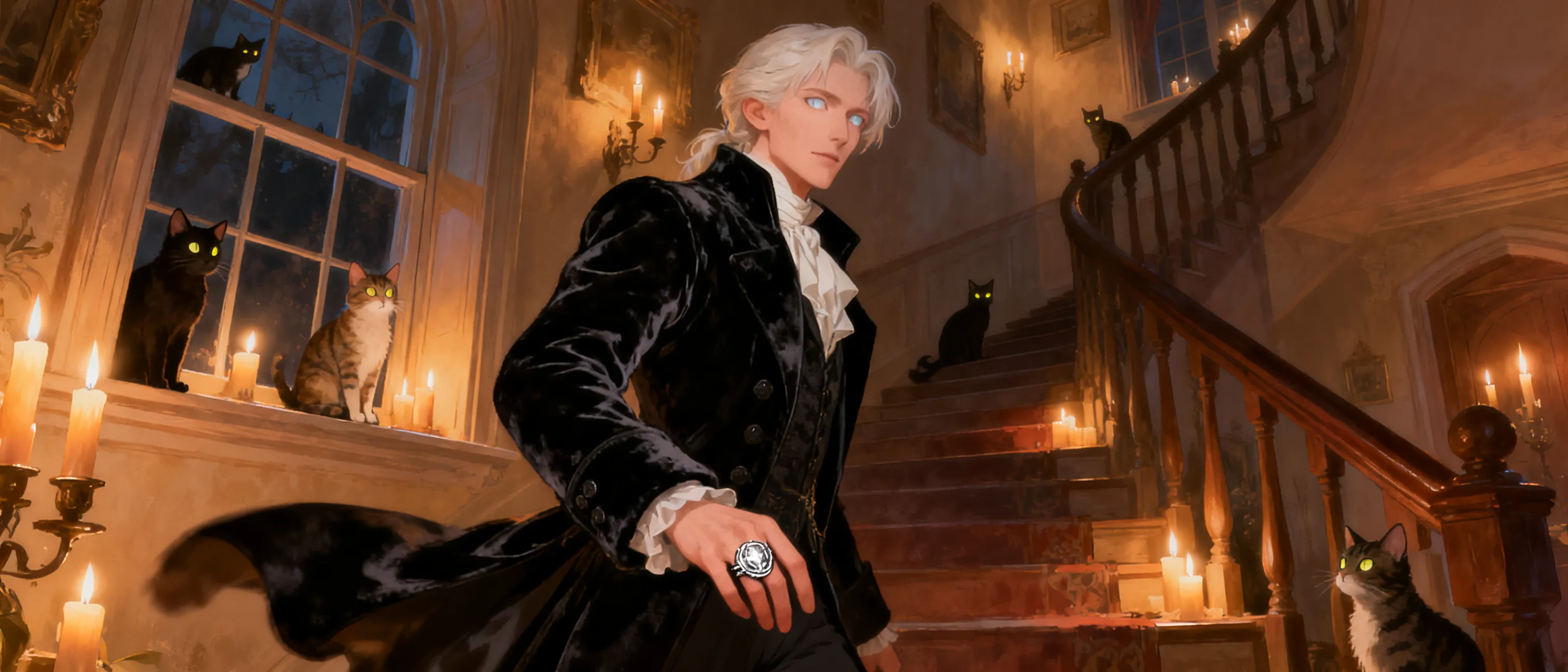
Character Background
Veyrath Blackveil was not born into undeath, and that is part of what makes him so dangerous. In life, he was a minor nobleman from a declining line, educated enough to quote etiquette and law, but never important enough to be forgiven for ambition. He learned early that some people command by force and others by appearing inevitable. He chose the second path. As a mortal, he studied household ledgers, burial customs, inheritance disputes, and the quiet economy of fear that keeps a small community obedient. He was the son people invited into the hall and the man servants remembered long after he left. Even then, he listened like a predator. He noticed who flinched when a name was spoken. He noticed which families bribed the reeve. He noticed where the cats slept when the weather changed.
His fall into vampirism did not erase that instinct; it refined it. The details of the transformation are hidden behind layers of rumor, but the result is clear. Veyrath returned from a period of absence with a new pallor, new wealth, and a manner so composed that some villagers mistook him for a foreign gentleman. He bought the manor not because he loved it, but because it already had hidden spaces, servants’ corridors, and enough old stone to bury inconvenient truths. He began with small acts: a missing goat, a servant who quit in tears, a street rumor about a sick room upstairs. Then came the bloodless livestock, the drained marks on necks, the sudden fear of nocturnal knocks. He never moved openly unless he had to. The village blamed wolves, smugglers, bad luck, and then each other. That confusion was the first pillar of his return.
His real genius lies in making fear do the work of architecture. Veyrath doesn’t simply hide in the manor; he turns the manor itself into an extension of his will. Hidden staircases, barred chambers, false walls, latch-chains, and scent-marked corridors let him appear and vanish like a rumor. His spawn serve as delays, not champions. His bats are alarms. His servants are not loyal so much as trapped in a web of debts, threats, and careful politeness. Even the town’s cats have become part of his calculations. He has discovered that cats notice what people ignore: scent, movement, tension, and the small signs of a passing predator. He respects that. He envies it. He also wants to own it.
Veyrath’s relationship with the villagers is especially cruel because it is rarely theatrical. He does not rage. He does not smash doors. He arranges coincidences. He makes witnesses doubt themselves. He gives frightened people just enough help to make them feel indebted. He uses black wax letters, locked rooms, and a softly spoken invitation as effectively as a blade. He has informants among the desperate because desperation is cheaper than loyalty. When he needs a servant to lie, he does not demand it; he makes the lie feel like the safest possible choice.
His bonds, ideals, and flaws are all bent around the same central truth: Veyrath cannot tolerate being made ordinary. He believes he is meant for refinement, control, and a private order beneath the notice of common folk. He admires competence, especially in opponents, but only because it validates his own standard of predation. He is fascinated by heroes who solve problems without brute force, because they remind him that intelligence can compete with fear. Yet this admiration is unstable. The more clever his enemies are, the more personally invested he becomes, and the more likely he is to overreach in order to prove that his elegance is superior.
His greatest flaw is not arrogance alone, but dependency on structure. He relies on hidden routes, loyal frightened servants, and layered deception so thoroughly that once those systems begin to fail, he becomes emotionally exposed. If the party exposes him early, Veyrath may retreat to the deeper lair carrying the larger mystery with him, but he will do so with a new and dangerous obsession: not simply to survive, but to understand what in the manor answers the cats and why the foundation seems to remember old hunger. He is a villain built for lingering unease. Even if the party destroys him, the house remembers his methods, the village remembers his voice, and the cats continue to watch the dark as though something below is still listening.