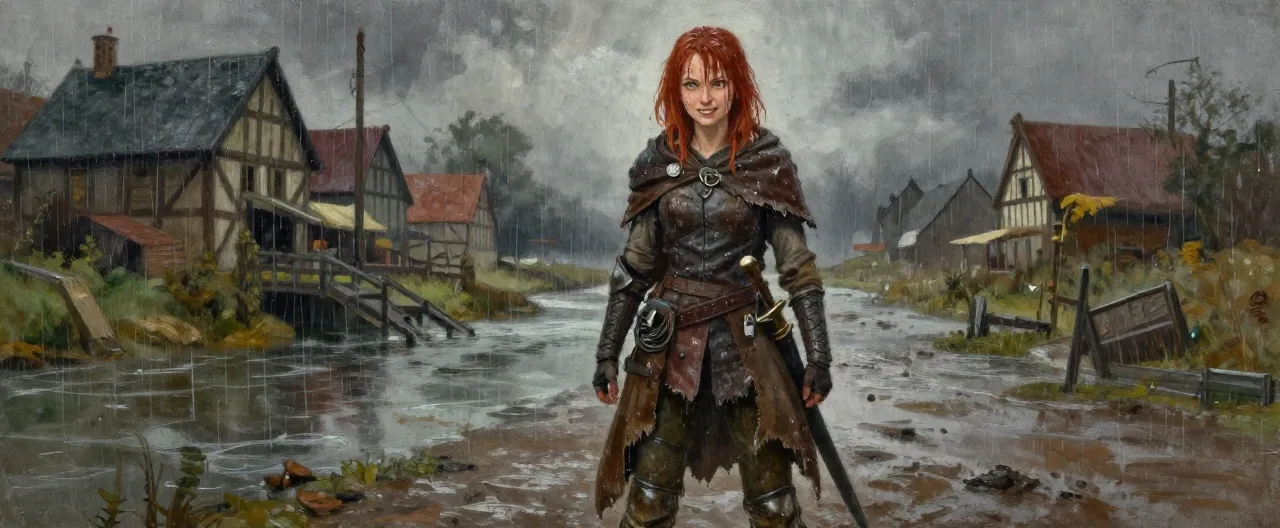
Molly Wade was born on the road, somewhere between Marlow and the river castles, and never quite got off it. Her mother was a tinker who walked the river villages selling pans, patches, and small stolen things, and her father — she has been told — was a toll-man who drowned before she learned to walk. She was raised on the Kendal Water's banks in the last years of King Aldous's reign and the first years of the silence that followed.
She can't remember a time when the roads had a master. The Iron Chapter didn't exist when she was small; the coin she learned to count was mostly coppers, and mostly questionable.
She learned everything from her mother and from the fair-crowd circuit that follows the autumn markets along the river: Marlow, the crossing towns, the castle markets under House Merrick's banners. Pickpocketing is a trade with rules, and Molly learned them all — the shuffle, the brush, the stage, the drop — and how to read a crowd the way a gambler reads cards. She also learned Thieves' Cant from the circuit's older hands, the coded jargon that lets a thief talk openly in a taproom full of militia, and she learned the one rule that kept her mother alive for forty years on roads with no law on them: never owe anyone anything you can't pay back with your hands.
That rule failed her at eighteen. She made a bad deal with a moneylender's enforcer — a bridge toll, a stake in a rigged dice table, an escalating debt she won't explain even now — and the enforcer decided to collect in labor rather than coin, the kind of labor a road thief can't walk away from. Molly ran north up the River Road, two days ahead of his men, carrying a patched cloak, her mother's wire, and a debt she intends to settle on her own terms. She reached Marlow the week of the autumn fair, when the town was frightened and full of strangers, and she was still in its taprooms when Clara Saddler vanished.
She is no believer, but she grew up listening to preachers' carts, and she has heard the Congregation of the Last Dawn twice this month and doesn't like the sound of it — a prophecy that promises a chosen king smells, to her, like a setup for the next collection plate. She keeps a small coin from her mother's collection at her belt, a worn piece of Tymora's likeness from one of the road shrines, less as prayer than as habit: luck for the road, cheaply bought, freely carried.
She joined the search for Clara because it was work with coin attached, and because the miller's yard was the first place in Kendal that asked her for help instead of demanding her papers or her purse. She'll deny it if pressed. Keep her alive a while, she says, and she'll pay it back in work. She doesn't like owing people — and she is very good at not mentioning the people she already does.