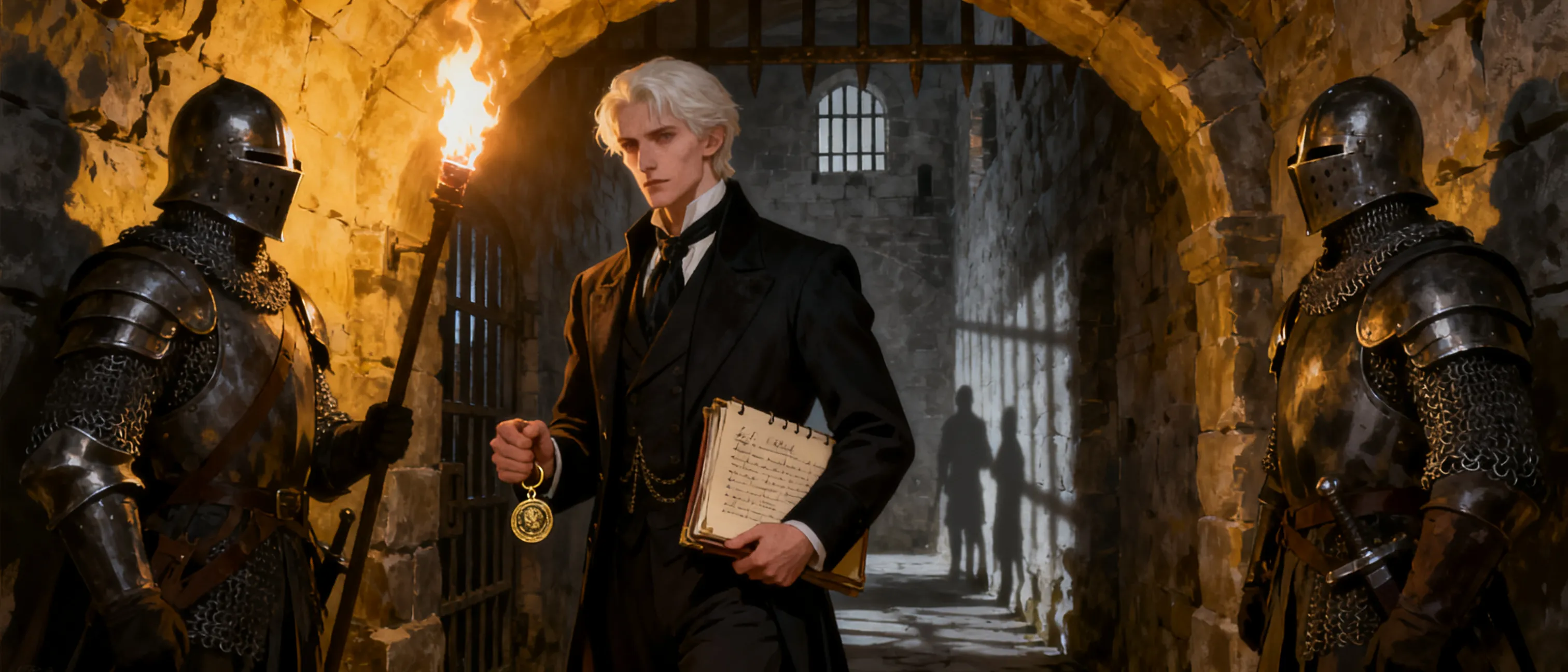
Character Background
Caldor Vane was not born with a crown, but he grew up close enough to power to learn its habits. As a younger son of a minor house, he was never meant to inherit much more than a name, a formal education, and expectations that he would serve the city rather than rule it. He learned early that authority belonged to those who could make disorder look expensive. Merchants were easier to control than soldiers. Scribes were easier to frighten than nobles. And a frightened bureaucracy could bury almost anything if given enough stamped paper and a clear set of instructions.
He excelled in that environment. Caldor was clever, organized, and patient. He understood how people treated paperwork as if it were reality itself. When a debt was recorded, it became a burden. When a charge was written down, it became a truth. When a name was crossed out, it might as well have never existed. That insight should have made him a reliable steward or a cautious magistrate. Instead, it taught him how to build a machine that could hide crime inside procedure.
His first steps into corruption were not dramatic. He altered one confiscation log to protect a benefactor. He moved one witness into a holding cell where no official record placed them. He signed one arrest warrant that he knew was a lie because the target had become inconvenient to someone more powerful. Each compromise seemed temporary. Each abuse seemed justified as a necessary answer to unrest, scandal, or the preservation of peace. Over time, the exceptions became the system. He discovered that if he controlled the records, he could control the story, and if he controlled the story, he could control what the city believed about justice.
The keep and the prison beneath it became central to his rule. The dungeon was old, damp, and easy to repurpose. Prisoners who might cause embarrassment vanished into rooms with no proper ledger entry. Confiscated goods were rerouted through the armory and quietly sold. Watch captains learned that promotion came faster when they followed orders without asking where the bodies went. Clerks learned that errors were forgiven if they served the lord’s seal. Informants learned that fear and coin both bought access.
Yet Caldor is not an idiot, and that is what makes him dangerous. He understands that tyranny survives best when it is tidy. He keeps his voice level, his clothes clean, and his cruelty hidden behind legal language because he knows that overt monsters inspire resistance. He prefers to look like administration. Even his punishments are framed as necessities. He does not say, “I will ruin you.” He says, “This matter will be resolved.”
His personal flaw is that he believes control can replace conscience. He can explain every betrayal in terms of stability, every falsified record in terms of order, and every disappearance as an unfortunate administrative burden. Deep down, however, he fears being ordinary, fragile, and answerable to people he once considered beneath notice. That fear has hardened into arrogance. He would rather burn his own servants’ careers than admit a mistake.
The party’s imprisonment matters because they were not just another inconvenience. They were evidence in motion. They knew things, saw things, or were too hard to silence cleanly. Caldor chose the prison because it was efficient: isolate them, confuse them, and let the city forget they ever mattered. That is why the prison break is so dangerous to him. If the party escapes, they do not merely steal their freedom; they expose the architecture of his rule.
If confronted, Caldor will try to manage the crisis, not fight like a hero. He will use warrants, patrol routes, bribed enforcers, and legal authority to split the party and contain the damage. Only if everything collapses will he personally move toward violence, and even then he will choose escape over valor. Yet there is a narrow, difficult path toward redemption. If Caldor is ever forced to face the truth without guards, seals, or lies to hide behind, he may confess. That confession would not make him good, but it could make him accountable. Whether the table allows that rare possibility or prefers a satisfying downfall, Caldor Vane is built to be a villain whose real battlefield is the city’s faith in his legitimacy.