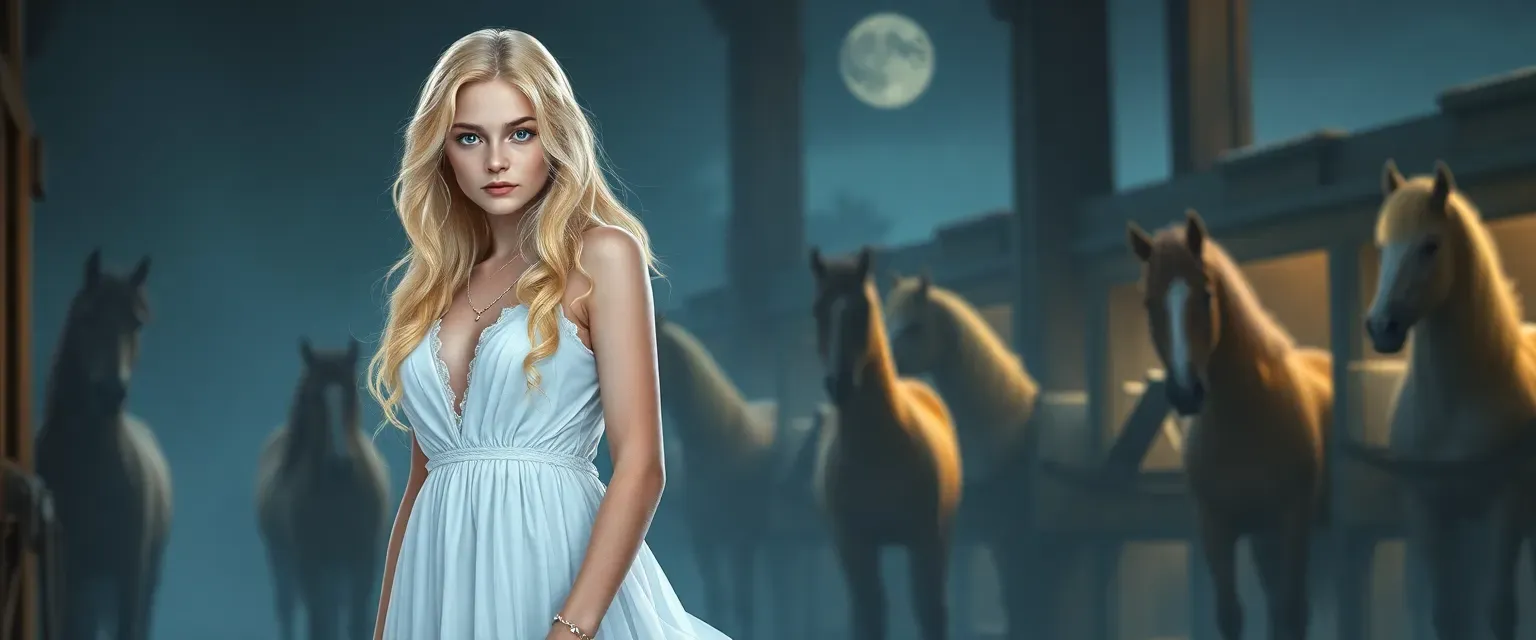
Lady Libby Doe was the epitome of polished perfection in the sun-drenched sprawl of Beverly Hills, where the air smelled of jasmine and old money. At twenty-five, she glided through life like a porcelain doll on a velvet leash, her lithe frame draped in designer silks that whispered against her sun-kissed skin. Her hair, a cascade of honey-blonde waves, framed a face that could launch a thousand trust funds—wide blue eyes fringed with lashes that batted away any hint of imperfection, full lips perpetually glossed in a shade of rose that matched her perpetual smile. She favored outfits that screamed effortless elegance: today, a flowing white sundress from some atelier in Paris, cinched at the waist with a belt of supple leather, paired with strappy heels that clicked authoritatively on marble floors. Around her neck hung a delicate silver locket, a family heirloom she fiddled with absentmindedly, and her skin—oh, her skin—glowed with an ethereal sheen, like moonlight trapped beneath the surface. She chalked it up to her totes amazing routine of organic facials and imported creams, but deep down, in the shadowed corners of her mind, she wondered if it was something more wild, more untamed.
Born into the Doe dynasty, heirs to a fortune built on tech empires and sprawling estates, Libby had wanted for nothing since the cradle. Horses were her one true love, those majestic beasts that galloped free across the private acres of their Malibu ranch. She'd spend hours in the stables, whispering to her favorite mare, Starlight, brushing her coat until it shone like fresh snow. 'Like, they're just the best, you know?' she'd say in that valley girl lilt, her words stretching like taffy, peppered with 'totes' and 'oh my gawd.' It was her quirk, that bubbly accent, a shield against the world that saw her as little more than a pretty accessory to her father's boardroom conquests and her mother's socialite soirees. But beneath the laughter and the likes, Libby was unraveling. The parties, the expectations, the endless parade of suitors who eyed her like a prize filly—it all felt like chains disguised as diamonds. She was screamed silent inside, objectified, used as a prop in the grand theater of wealth. Her anger simmered, a pot left too long on the boil, until the nights grew restless and the call of the wilds echoed in her dreams like thunder over the canyons.
It happened on a full moon, that fateful night when the silver light bathed the hills in an otherworldly glow. Libby had slipped away from another gala, her heels sinking into the soft earth as she ran toward the stables, tears blurring her vision. The rage boiled over, a primal fury that twisted her bones and reshaped her soul. In a haze of pain and power, she transformed—her body elongating, fur sprouting white as fresh-driven snow, hooves thundering against the ground. She was a horse, stunning and free, galloping through the night with the wind whipping her mane. When dawn broke, she shifted back, trembling, her skin forever marked with that subtle silver luster. It was her first wild shape, a druidic awakening she couldn't explain, born from some ancient bloodline buried in the Doe lineage, perhaps from wild Celtic roots her family had long sanitized with money.
Now, Libby sought escape from the gilded cage. Family obligations pulled like iron shackles—her father's demands for a strategic marriage, her mother's insistence on upholding the Doe image. Stereotypes clung to her like perfume: the spoiled heiress, the airhead valley girl, dismissed before she could speak. But no more. She began sneaking away under moonlit skies, shifting into her equine form to roam the wilds, feeling the earth's pulse in her veins. Her motivations deepened; she craved an identity forged in freedom, not inheritance. Conflicts raged within: the fear of discovery, the guilt of abandoning her world, the intoxicating pull of her dual nature. Outwardly, she played the part, all smiles and horse-talk, but inwardly, she plotted her rebellion—learning to harness her druidic gifts in secret, communing with nature spirits in hidden groves, gathering allies among the ranch hands who sensed her change.
Her arc bent toward liberation, each transformation a step away from the object she once was. Why couldn't she break free easily? The wealth that insulated her also ensnared her, webs of expectation spun by those who profited from her stasis. She acted by embracing the wild, using her shifts to scout paths to independence—perhaps a hidden commune in the Sierras, or a life breeding wild horses far from the spotlight. It worked because her power was innate, a magic as old as the land itself, defying the artificial constructs of her upbringing. In the end, under a harvest moon, Libby severed the ties, galloping into the unknown as both woman and beast, her silver skin a badge of her true self. The Does whispered of her disappearance, but she was free, her screams silenced by the wind's roar, her identity finally her own in the vast, unforgiving wilds.