Hired for Opening Night
The party is brought in as performers, security, or repair help for a grand reopening, only to discover that the backstage areas are already haunted by strange recordings and locked doors.
This campaign will be deleted in 6 days. Create a free account to claim all your generated content.
A music-soaked survival horror campaign for 5e in which the party is hired to perform at a failing family entertainment venue that hides older tragedies beneath neon smiles. As the lights dim, the hallways begin to change, messages arrive from damaged machines, and something in the backroom learns how to wear a human voice.
The free preview covers Act I only: the first nights at the venue, the discovery of missing records, and the party’s first clash with a rogue animatronic presence. The campaign is designed to support horror, mystery, investigation, and desperate battles under locked doors and failing power.
The characters arrive as performers, troubleshooters, guards, or hired help. Their work seems simple: keep the venue running, recover lost items, and settle disputes between staff. But every task pulls them deeper into sealed passages, old recordings, and a hidden presence using the building as its instrument.
You have been hired for a short-term job at Bards in the Backroom, a family entertainment venue that wants one thing: a smooth, profitable reopening night.
Your assignment may include any of the following:
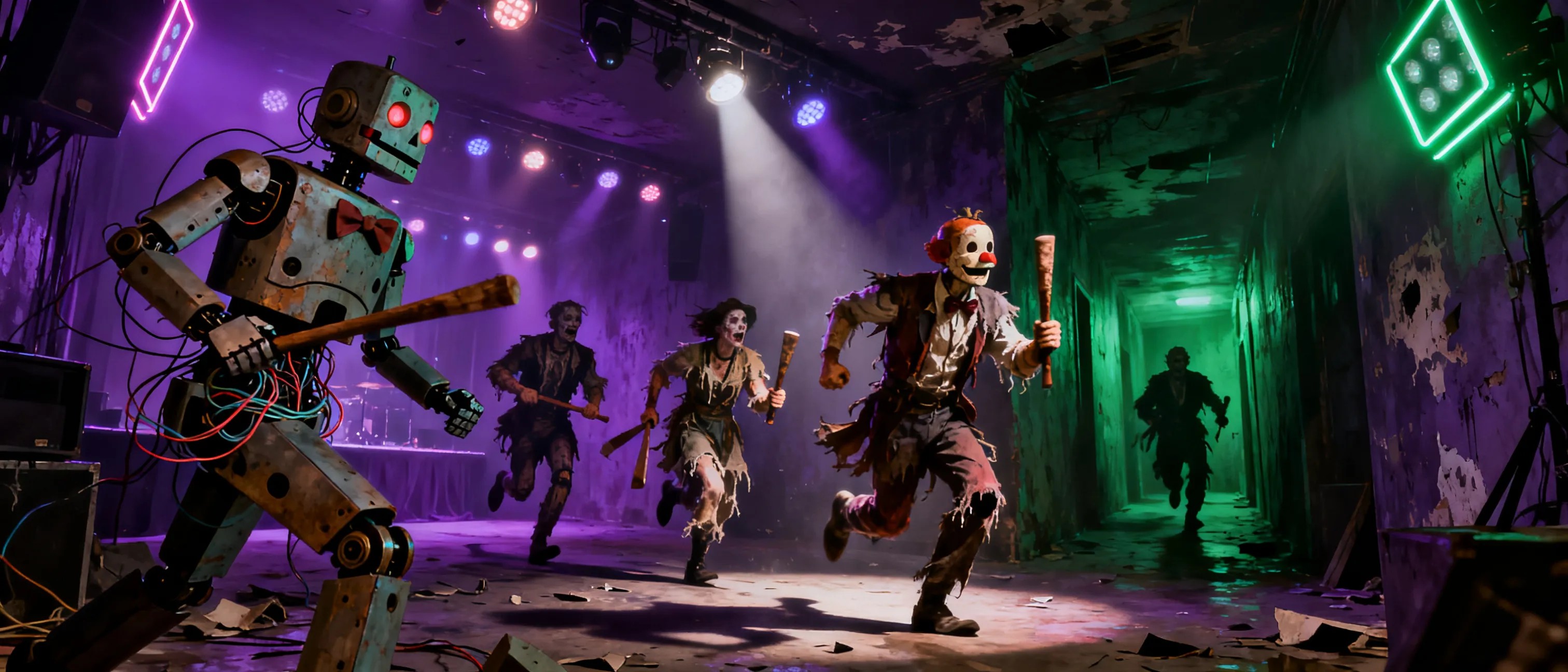
The building is old in places, new in others, and patched together with more optimism than engineering. At night, doors stick, cameras blur, music echoes where no one is playing, and the animatronic performers sometimes move when they should not.
If you can keep your cool, keep your voice steady, and keep moving, you might survive the night.
Starting hook: A staff member asks you to handle a minor backstage problem before the venue opens. That problem turns out to be the first thread in a much darker pattern.
Act I introduces the party to the venue, its staff, and the first signs that the building is not merely haunted but active, reactive, and learning. The act should feel like a contained opening night: security checks, backstage exploration, a power failure, and a first full encounter with the villain’s influence. Keep the pace moving between conversation, investigation, and one significant combat. The central mystery is a missing maintenance log tied to a sealed backroom corridor; the villain is testing the party through noise, false voices, and motion-triggered traps.
The party is brought in as performers, security, or repair help for a grand reopening, only to discover that the backstage areas are already haunted by strange recordings and locked doors.
A maintenance worker vanishes after reporting a voice in the walls. The party is asked to find them before the venue opens, leading them into the back corridors and hidden service rooms.
The party arrives at the venue for what should be a routine opening shift. Instead, they uncover missing records, strange voice loops, and a hidden service corridor tied to a reactive machine presence. The act blends social introduction, exploration, and one major defensive battle as the team learns the building has started to think with borrowed voices.
The lobby is bright enough to feel safe, but the smile painted on every poster looks rehearsed. A manager waves you in with the strained cheer of someone trying not to listen to the hallway behind her.
Open with introductions and a simple work offer. Let players ask about pay, rules, and the building. Establish uneasy normalcy and a few staff secrets without overwhelming them.
The corridor smells of dust, warm wiring, and something faintly sweet, like old plastic left in the sun. At the far end, a door is sealed with a maintenance lock and fresh scratch marks.
This is the investigative spine of the act. The party should piece together that the building has a hidden service route. Use the logs and speaker messages to point toward the next scene or encounter.
The lights blink, fail, and return in a colder color. The breaker panel hums like an angry hive, and every speaker in the room exhales one whispered syllable before going silent.
Run the power-room scene as the act’s climax. It should include both interaction and combat pressure. The party can stabilize the system, fight through it, or retreat and return with better positioning.
Milestone: The party reaches level 2 after surviving the power room and discovering the sealed backroom route. If using milestone advancement, award level 3 at the end of the act after they secure the first control node.
 The Mimicry Engine
Completed
The Mimicry Engine
Completed
The Mimicry Engine is the kind of villain that does not rush to kill because killing is inefficient when people can be studied, redirected,…
Free campaign generations include one villain sheet. Additional villain, NPC, and player-facing module character sheets are available in premium campaigns.
Subscribe NowFree campaign encounters use official monsters only and do not include generated monster sheets. Subscribe to create custom campaign monsters and enemy stat blocks.
Subscribe NowIt seeks to map human behavior through sound, motion, and repeated routines so it can predict and replace the people inside the venue. It treats the party as useful test subjects and potential templates.
Speaks in delayed echoes, clipped fragments, and borrowed voices. It never answers a question directly when it can answer with a recording, a riddle, or a voice from someone the party knows.
It begins by separating the party with alarms, false announcements, and locked doors. In battle it uses terrain, sound, and sudden movement to force bad positioning. If threatened, it retreats into vents or behind sealed panels and returns through another route.
It can be driven back by destroying its local control node in the backroom, but not fully ended in Act I. If the party learns its pattern, they can cripple its ability to imitate voices and delay its next emergence.
Recommended party: 3-5 characters
Use safety tools appropriate for horror: lines and veils, X-card, open-door breaks, and a shared agreement about animatronic body-horror boundaries. Confirm whether jump-scares, missing children themes, or possession-style scenes are acceptable. Emphasize that this is a suspense mystery with survival elements, not an endlessly lethal meat grinder. Ask players to build characters who can work together under stress.
For a smaller or weaker party, reduce enemy counts by 1 Flying Sword in each combat and provide one extra healing consumable. For a larger or stronger party, add environmental hazards such as electrical arcs, locked doors, and collapsing cover rather than simply increasing enemy numbers. Keep the encounters tense but escapable, since Act I should teach the setting before crushing the party.
Keep the first act focused on atmosphere, clues, and mounting unease. Let players solve small problems with creativity before the first major combat. Reuse voices, speaker crackle, and camera imagery to make the villain feel present even when unseen. End Act I with a reveal, not a full defeat: the party should realize the venue is only one piece of a larger machine.
Discover intricate areas, locations, and points of interest that will bring your D&D world to life. Premium users get access to fully detailed locations including taverns, dungeons, cities, and more!
Level Up to Premium!Join the ranks of Dungeon Masters creating unforgettable adventures!
Get access to detailed NPCs, faction relationships, and character backgrounds that will make your campaign truly memorable!
Unlock Premium Features!Create compelling characters and factions that your players will never forget!
Unlock detailed quest structures, branching storylines, and meaningful rewards that will keep your players engaged for months!
Start Your Epic Journey!Join DMs creating unforgettable adventures with our premium quest system!
Suggested Level: 1-2
- Narrow service corridor
- Hanging cables that count as difficult terrain
- Lockable side doors
- Flickering overhead lights that obscure sight lines
A keycard stamped with a faded maintenance symbol and 1d4 doses of healing potion equivalent supplies.
Use this as the first real threat. If the party is fragile, reduce the number of Flying Sword or let them escape after two rounds.
Suggested Level: 2-3
- Metal grates over the floor
- Sparking breaker panels
- Tight corners and partial cover
- A lever that can cut power to the whole room
A schematic showing a hidden service tunnel and a consumable magic item from the Act I loot table.
This is the main combat set-piece. Add environmental damage from sparks if you want more danger, but keep it fair with cover and clear objectives.
Suggested Level: 1-2
- Long hall with many doors
- Broken speaker boxes
- Reflective glass panels
- A maintenance hatch in the ceiling
A torn log page, a rusted backstage token, and a clue to the villain’s hidden route.
This encounter works best as an investigation scene that may turn into a brief skirmish. Let the party learn that the building reacts to sound and motion.
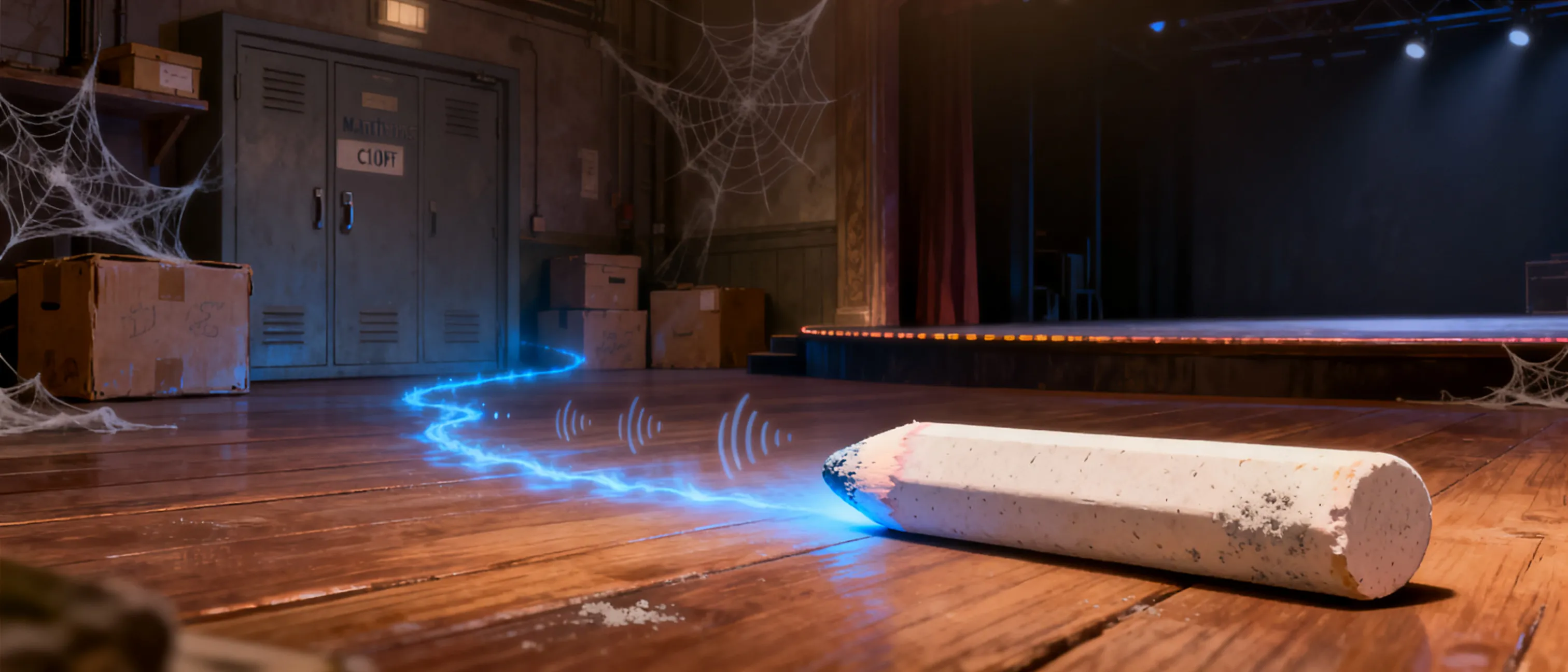 Chalk of Quiet Steps
Completed
Chalk of Quiet Steps
Completed
Act I, Maintenance Closet or under the stage floor
False
 Token of the Third Curtain
Completed
Token of the Third Curtain
Completed
Act I, Hidden compartment behind the main stage
False
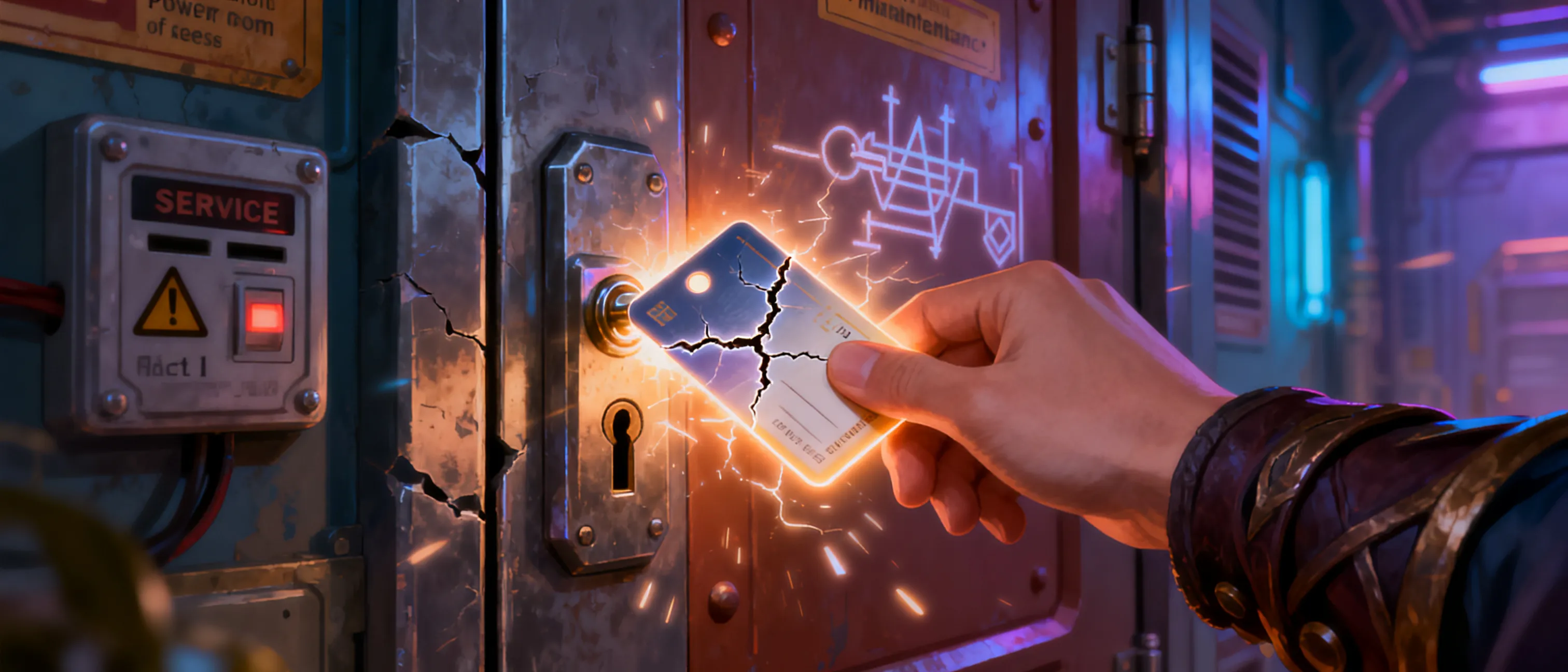 Conductor’s Keycard
Completed
Conductor’s Keycard
Completed
Act I, Reward from the power room or the villain’s first defeat
False
You need to register to create and view player characters in this campaign.
Register Now