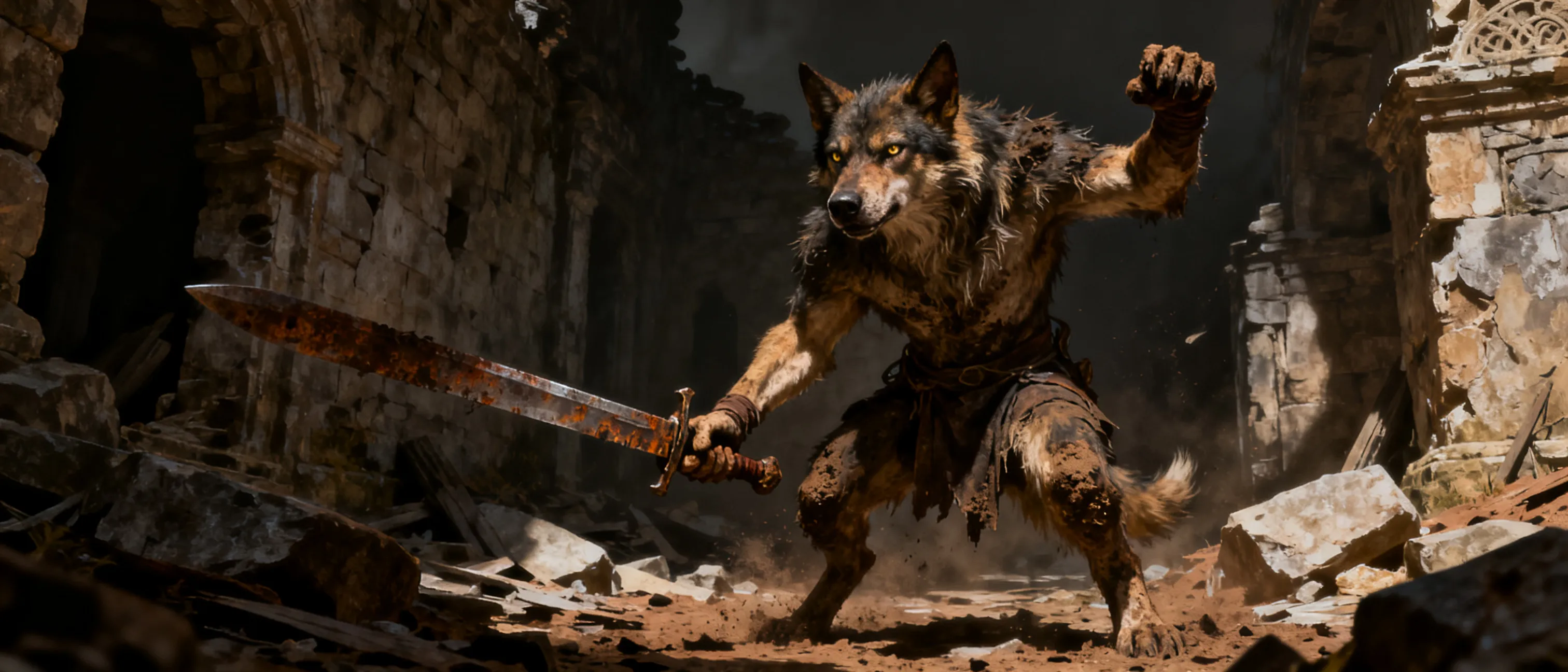
Keen Smell 30 ft. (Advantage on Wisdom (Perception) checks that rely on smell.)
passive Perception 13
Characteristics
Damage Vulnerabilities
—
Damage Resistances
bludgeoning, piercing
Damage Immunities
—
Condition Immunities
—
LanguagesCommon, Undercommon
Traits
Pack Tactics
The Cynocephalus has advantage on an attack roll against a creature if at least one of the Cynocephalus's allies is within 5 feet of the creature and the ally isn't incapacitated.
Canine Reflexes
The Cynocephalus can add its Dexterity modifier to its initiative rolls.
Actions
Bite
Melee Weapon Attack: +5 to hit, reach 5 ft., one target. Hit: 1d8 + 2 piercing damage.
Multiattack
The Cynocephalus makes two bite attacks in one turn.
Combat Behavior
Tactics
• Employ ambush tactics in familiar environments. • Use intimidation to demoralize weaker foes before attacking.
Combat Style
Pack Fighters, often coordinating attacks to maximize their impact.
Morale
Cynocephali will fight to the death to defend their territory but will retreat if outnumbered significantly.
Monster Description
The Cynocephalus, a humanoid creature with the head of a dog, is steeped in folklore and fear. Known to stalk the shadows of ancient battlegrounds and desolate ruins, these beings blend the physical prowess of a canine with the cunning of humanity. Their fur is a mottled blend of brown and black, often dirtied from their life scavenging and hunting. With intelligent eyes that scan their surroundings, they exhibit both loyalty and hostility, depending on the side they deem beneficial. Cynocephali are seen as harbingers of misfortune, often heralded in tales told to frighten children. They are rumored to communicate with the spirits of the dead, gaining knowledge, or holding secrets vital to the balance of the realms.
Monster behavior
Cynocephali are often found in packs, employing their numbers to intimidate and attack. They are not just mindless beasts; they strategize their assaults when hunting for prey or defending their territory. Using their Pack Tactics ability, they can coordinate attacks to overwhelm their foes. Their reputation for being merciless in the hunt makes them feared by nearby settlements, as they are known to raid for supplies when hungry. These creatures find joy in the thrill of the hunt and often leave no evidence behind, making tracking them difficult for those who oppose them.
Ecology
In the ecosystem, Cynocephali are opportunistic predators that play a significant role in controlling populations of smaller creatures. Their predatory nature affects the balance within their territories, allowing populations of small mammals to thrive or diminish based on their hunting patterns. They often scavenge leftovers from larger predators, showcasing their adaptability in various environments. Cynocephali sometimes fall prey to larger creatures themselves, serving as a food source for apex predators in the area.
History
The history of the Cynocephalus is interwoven with that of ancient civilizations. Often depicted in ancient texts and inscriptions, they were viewed as guardians of the underworld or as messengers of death. As legends grew, so did the fear surrounding these creatures, leading to many tales of encounters where they appeared during ominous events. Over time, their image has both repelled and fascinated communities, leading to their isolation but also to the emergence of cult-like followings that worship them as protectors of the lost and guides to the afterlife. Despite myths portraying them as villainous, some believe they represent the balance between life and death, protecting the secrets of the beyond.
Ready to Unleash Your Dungeon Master Potential?
Join thousands of DMs and turbocharge your campaign preparation with Fable Fiesta!
Register, and get access to monster abilities, combat behaviour and lore!