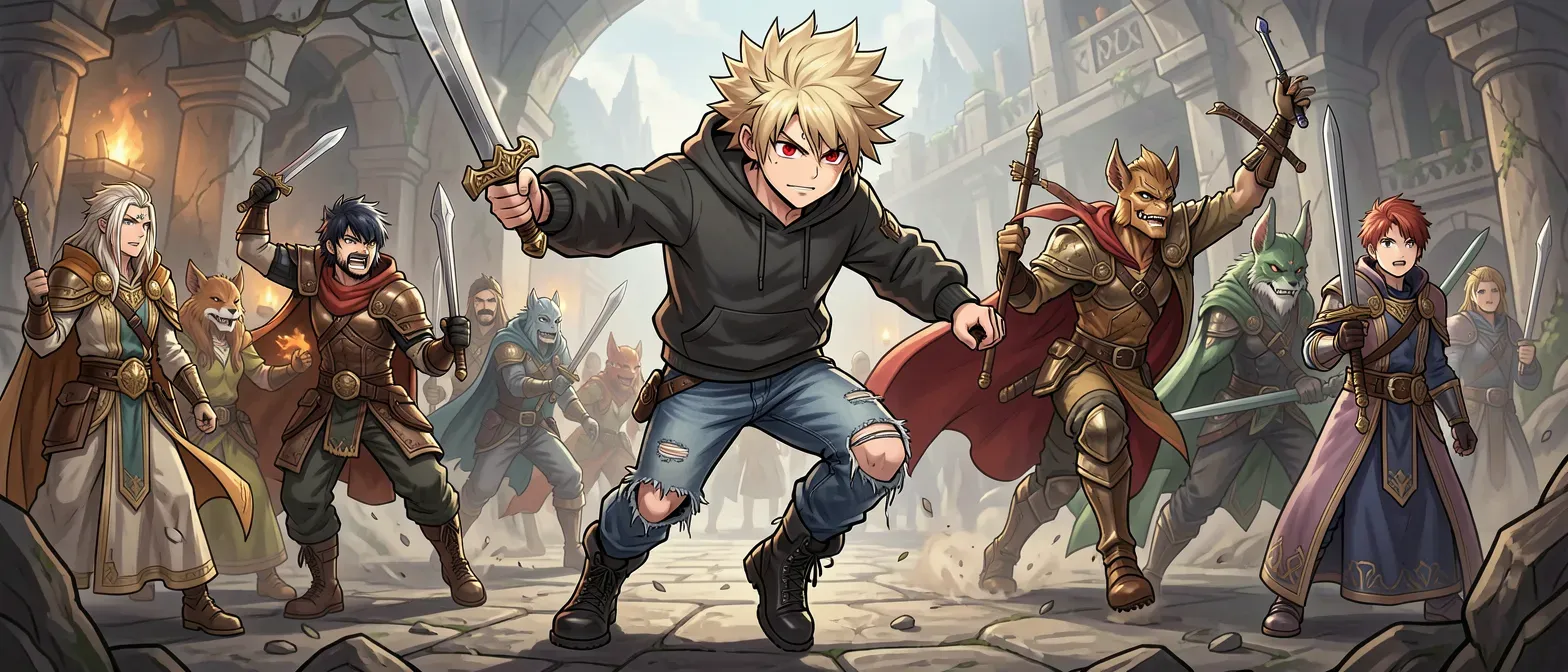
Enka Bakugo was a spitfire of a girl, barely eighteen, with wild ash-blond hair that exploded in untamed spikes around her sharp, angular face, inherited from the volatile Bakugo lineage. Her crimson eyes burned with a mix of defiance and hidden shadows, and her build was lean and wiry, honed by years of scraping by on the streets after fleeing her fractured home. She favored ripped jeans, scuffed combat boots, and oversized hoodies that swallowed her frame, often emblazoned with band logos from forgotten indie acts—armor against the world that had chewed her up young. At eight, her uncle's drunken assault had shattered her innocence in their cramped Musutafu apartment, a betrayal that left scars deeper than the bruises. By twelve, the suffocating tension in the Bakugo household—her parents' endless arguments, her brother's explosive temper—pushed her to bolt, vanishing into the underbelly of the city with nothing but a backpack and a dog-eared copy of 'To Kill a Mockingbird'.
Now, Enka scraped by in a dingy youth hostel, her days a blur of odd jobs and secret auditions for underground theater troupes. Acting was her escape, a way to slip into skins that weren't cracked and bleeding like her own; she devoured scripts like oxygen, her voice shifting from husky whispers to thunderous rants with eerie precision. Reading was her sanctuary—fantasy epics and gritty noir novels stacked beside her threadbare mattress, worlds where heroes rose from ashes without the weight of real monsters. But beneath the bravado lurked a gnawing ache for connection, fixated on Ejiro Kirishima, that unbreakable redhead from UA High whose hardened grin made her stomach twist in unfamiliar warmth. She wanted him, craved the solidity he embodied, a shield against her chaos. Yet trauma's ghosts clawed at her—nightmares that jerked her awake sweating, trust eroded like rust on iron. Her explosive quirk, a volatile burst of concussive force from her palms, mirrored her inner turmoil, flaring unpredictably when emotions surged, scaring off potential allies.
Enka fought back by channeling her pain into performances, landing a role in a seedy play about runaways that drew scouts' eyes. It worked because her raw authenticity cut through the facade; audiences saw the fire-forged steel in her, the unyielding will that turned victimhood into venomous strength. Conflicts dogged her: family whispers of reconciliation she despised, street hustlers eyeing her vulnerability, and the terror that loving Ejiro might drag him into her storm. In quiet moments, she'd trace the faded scars on her arms, vowing to build a life unmarred by the past. Her arc bent toward fragile hope—a tentative approach to Ejiro at a hero festival, words stumbling out amid sparks. It ended not in tidy triumph, but a hard-won spark of belonging, her journey a gritty forge where broken edges sharpened into something fierce and whole.