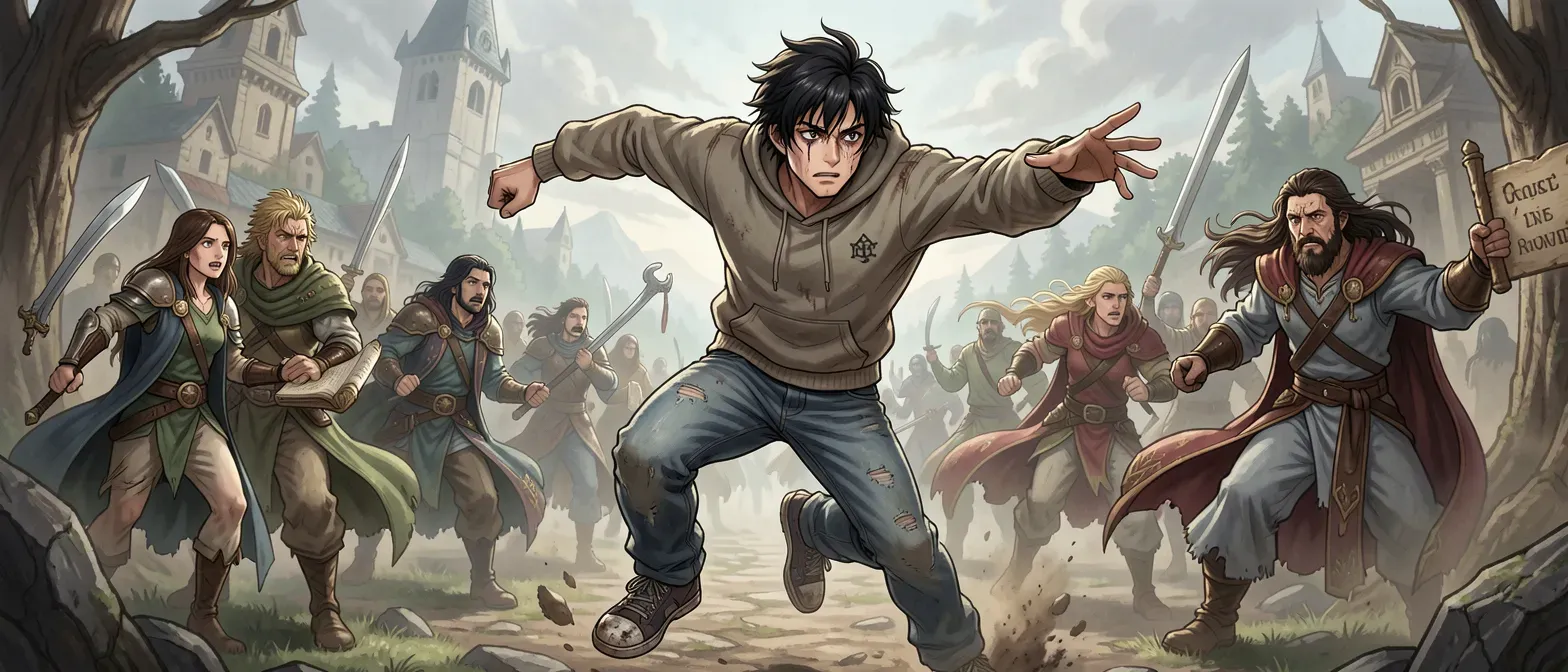
Keigo Takahashi was a wiry young man of twenty-four, standing at five-foot-ten with a lean build honed from years of odd jobs and the occasional pickup basketball game in the cracked lots of their rundown Tokyo suburb. His black hair was perpetually tousled, falling in unkempt waves over his forehead, and his sharp, almond-shaped eyes carried a perpetual shadow of weariness, framed by faint dark circles from sleepless nights. He favored faded jeans, scuffed sneakers, and threadbare hoodies that hung loose on his frame, the kind of clothes that spoke of practicality over pride, stained here and there from grease at the auto shop where he scraped by as a mechanic.
Born into a fractured home in the shadow of Mount Fuji, Keigo's life had always been a tightrope walk over an abyss of familial discord. His mother, Aiko, a resilient woman in her late forties with callused hands from waitressing double shifts, had raised him and his siblings alone after his father, Hiroshi, abandoned them for bouts of gambling and mistresses, only to slink back like a feral cat when his luck soured. Hiroshi was a towering brute of a man, fifty-two, with a paunch straining against his rumpled shirts and a perpetual scowl etched into his weathered face, his intelligence twisted into a weapon of manipulation—he could quote ancient samurai codes one moment and unravel a family's fragile peace the next with calculated barbs that left scars deeper than fists.
Keigo's heart ached most for his little brother, Ren, just sixteen, a slight boy with soft features and a quiet defiance in his wide eyes. Ren's secret—that he was gay—had bloomed like a fragile flower in their stifling home, confessed to Keigo in tearful whispers under the covers during power outages. Hiroshi's homophobic rages had escalated, his 'lessons' in manhood turning brutal, forcing Ren to hide who he was, dreaming of escape to a world that might accept him.
Keigo wanted nothing more than to shield his family, to build a life where Aiko could rest her weary bones and Ren could love freely, perhaps even start his own garage to pull them from poverty's grip. But Hiroshi's shadow loomed large, his manipulations sowing doubt—whispering that Keigo was weak, that Ren was a disgrace, binding them in chains of fear and obligation. Aiko's quiet endurance only deepened the guilt, her pleas for peace a constant reminder of the fractures Keigo couldn't mend.
Driven by a fierce, unspoken loyalty, Keigo began squirreling away savings, plotting a midnight flight to Osaka where jobs were plentiful and Hiroshi's reach short. He took extra shifts, mended Ren's broken spirit with late-night talks laced with his own quirk—a nervous habit of cracking his knuckles rhythmically, like a metronome counting down to rebellion. It worked because Keigo's steady presence was the one constant in their storm; his plans, born of gritty determination rather than grand heroics, chipped away at the despair. Hiroshi's barbs glanced off Keigo's growing resolve, his intelligence no match for a brother's unyielding love.
In the end, as cherry blossoms fell like silent promises, they slipped away under a moonless sky, Aiko's hand in Keigo's, Ren's backpack slung over his shoulder. Hiroshi's empire of cruelty crumbled in their absence, his roars echoing into emptiness. Yet conflicts lingered—Keigo's knuckles still cracked in the quiet hours, a reminder that some battles scarred the soul forever, even in victory's fragile dawn.