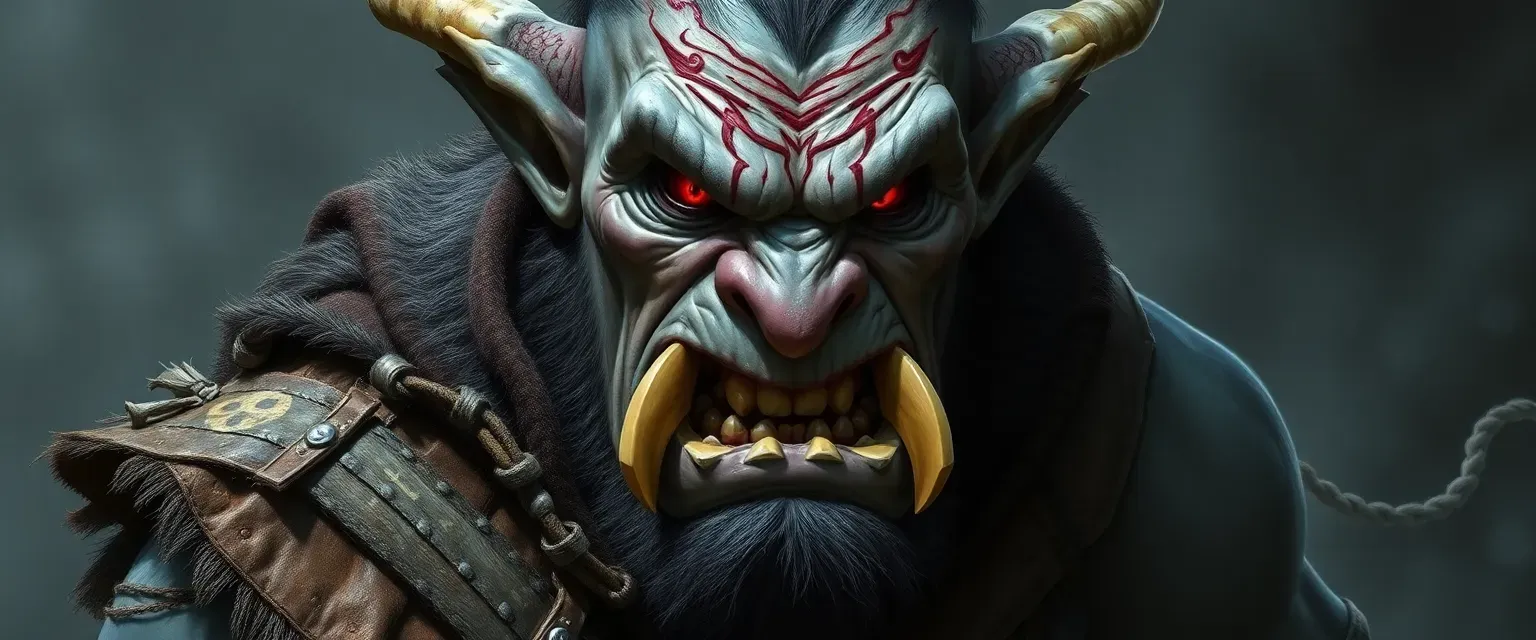
Mordak Ironfist was a hulking figure even among orcs, his grey skin etched with the scars of a hundred skirmishes, stretched taut over muscles that had once commanded respect through sheer brute force tempered by cunning. At forty-seven winters, he carried the weight of middle age in the deepening lines around his crimson eyes, eyes that burned like forge embers, always calculating, always probing for weakness in friend or foe. His tusks, yellowed but unbroken, protruded from a lower jaw that he clenched when deep in thought, a habit born from years of biting back rage in tribal councils. He wore the tattered remnants of his chieftain's garb—a cloak of stitched worg hides, frayed at the edges from his banishment, over a hauberk of rusted chainmail that clinked softly with each deliberate step. Around his thick neck hung a necklace of enemy fangs, a trophy from his raiding days, and his massive hands, callused and scarred, bore the faded tattoos of the Bloodaxe Clan, symbols of loyalty he now viewed with bitter irony.
Born in the shadowed crags of the Grimspine Mountains, where orc tribes clawed for survival amid endless wars with humans and dwarves, Mordak had risen from a lowly scout to warlord through a mind sharper than any axe. He dreamed of uniting the fractured clans under one banner, forging an empire from the chaos, where strength meant not just swinging a club but outwitting the storms of betrayal that plagued their kind. But ambition bred envy. His own kin, led by the scheming sub-chief Grimgor, whispered lies of cowardice during a raid gone sour—claiming Mordak had fled while they bled. Wrongfully accused, stripped of his axe and cast into the wilds with nothing but his wits, Mordak wandered the barren wastes, his heart a forge of vengeance. He scavenged, allied with outcast goblins, and honed his strategies in solitary campfires, etching maps of revenge into bone scraps.
What drove him was no mere thirst for power, but a twisted vision of orcish glory, where the weak were culled and the tribe thrived eternal. Yet exile gnawed at him; the betrayal exposed the rot in his soul, the paranoia that made him question every shadow. He struck back subtly at first—poisoned wells, stolen herds—sowing discord until Grimgor’s hold weakened. His intelligence was his blade: feints and alliances turned the tide, proving that a banished orc could topple a false king. In the end, under a blood moon, Mordak stormed the tribal hearth, his red eyes gleaming as he claimed his throne amid the screams, but victory tasted of ash. The clan he rebuilt was forged in fear, not fealty, and in quiet moments, he wondered if the betrayal had scarred him deeper than any wound, leaving a leader forever alone in his cunning tower.